Jazz pianist-composer-stylist Simon Nabatov flourishes on a recent release of a larger band outing entitled Time Labyrinth (Leo CD LR 881). It is a vibrant and nicely put-together program of six Nabatov compositions, played nicely, backdropping spotlight improvisations that flesh out the ideas and give them the immediacy of now. The zone occupied is Avant-Free as you would expect, the compositions are thoughtful, the soloing significant. And it is a winner.
Joining Simon at the piano are Frank Gratkowski on reeds, Matthias Schubert on tenor sax, Shannon Barnett on trombone, Melvyn Poore on tuba, Dieter Manderscheid on double bass and Hans W. Koch on synthesizer. The lack of a drummer opens up the articulation of the musicians into a slightly more New Music-chamber zone without negating the cutting-edge Improv orientation of it all. Some most notable of the collective improvisations give us a stunning Nabatov paving the way with his intricate pianisms--for example hear the opening "Waves" and following "Metamorph," the latter especially intriguing with its harmonic sequencing yet ultimately its pan-tonal texturing.
"Reader" follows with Gratkowski's flute handing the lead melody over a richly harmonic accompanying field of horns and piano. "Right Off" is another high point with Barnett's trombone taking center stage while dynamic pointilistic entrances to second the solo eventually prevail--the latter distinctly in a presence from Nabatov and ensemble. "Repeated" has some breathtaking piano moments. "Choral" ends us with a very memorable theme and a dramatically fitting close to a truly superlative sonic adventure.
This is a stunning program that anyone should listen to closely, anyone who wants to know what's happening in the most current avenues of Improv and Avant Jazz.
Sunday, June 7, 2020
Monday, June 1, 2020
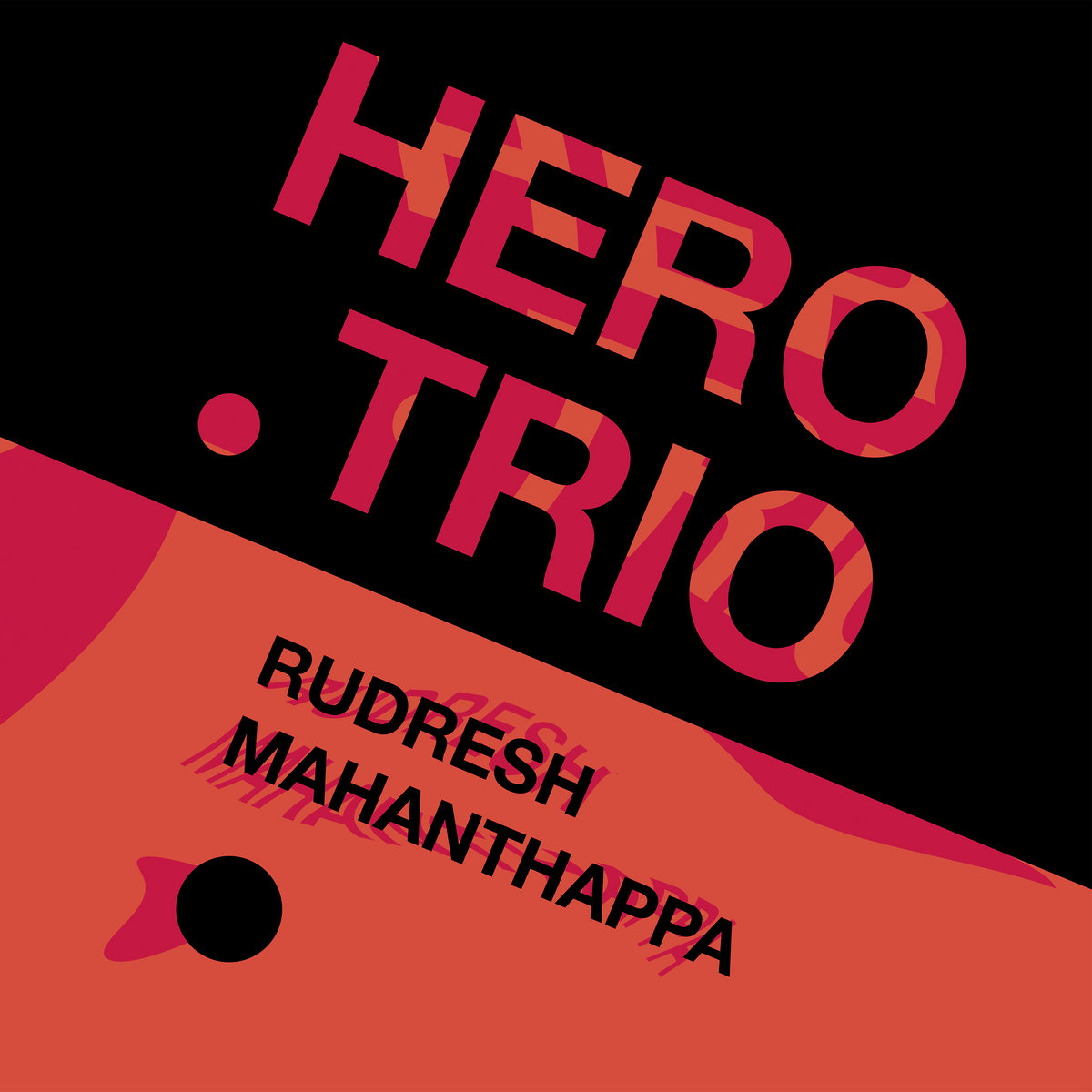
Rudresh Mahanthappa, Hero Trio, with Francois Moutin, Rudy Royston
If you like many of us these days need to reaffirm creative movement forward, turn to alto saxophonist Rudresh Mahanthappa and his Hero Trio (Whirlwind Recordings WR4760), the album and the group. No doubt some readers will know Rudresh as the brilliant principal alto sax master of our times. If not here is a chance to hear him do music more familiar to you, perhaps. As he states in the liners, after some 15 albums of his own compositions, he turns here to the music of some of his heroes, prime influences and inspirations, making the music over in his own special musical image. And why not? In a way this is a companion album to his Bird Calls, widening the scope somewhat while also turning to classic material and paring down to an essentialist trio with an excellent sense of adventure.
So we get some imaginative makeovers of choice lines and songs--of Charlie Parker ("Red Cross," "Barbados," and "Dewey Square"), John Coltrane ("26-2"), Ornette Coleman ("Sadness") Keith Jarrett ("The Windup"), Johnny Cash ("Ring of Fire,"). Stevie Wonder ("Overjoyed"), and some American Songbook Standards ("I Can't Get Started," "I'll Remember April")--the latter two in part Rudresh's homage to the sax trios of Sonny Rollins and Lee Konitz, and so also "Sadness" especially for Ornette's sax trio work.
This is notably Rudresh's first saxophone trio outing and it swings, rocks and opens up nicely in the hands of Rudresh and his colleagues double-bassist Francois Moutin and drummer Rudy Royston. The arrangements are subtle, open and most conducive to Mahanthappa's hard-driving, innovative line weaving and the very compatible accompaniment, the second and third improvisational voices from Moutin and Royston.
Every number undertaken sounds freshly re-minted, Mahanthappian, transformed into something very contemporary and admirably improvisatory. The trio cooks with joyous abandon yet structural smarts too. It is a most stirring outing, something you will no doubt want to hear, perhaps also to have! Recommended.
So we get some imaginative makeovers of choice lines and songs--of Charlie Parker ("Red Cross," "Barbados," and "Dewey Square"), John Coltrane ("26-2"), Ornette Coleman ("Sadness") Keith Jarrett ("The Windup"), Johnny Cash ("Ring of Fire,"). Stevie Wonder ("Overjoyed"), and some American Songbook Standards ("I Can't Get Started," "I'll Remember April")--the latter two in part Rudresh's homage to the sax trios of Sonny Rollins and Lee Konitz, and so also "Sadness" especially for Ornette's sax trio work.
This is notably Rudresh's first saxophone trio outing and it swings, rocks and opens up nicely in the hands of Rudresh and his colleagues double-bassist Francois Moutin and drummer Rudy Royston. The arrangements are subtle, open and most conducive to Mahanthappa's hard-driving, innovative line weaving and the very compatible accompaniment, the second and third improvisational voices from Moutin and Royston.
Every number undertaken sounds freshly re-minted, Mahanthappian, transformed into something very contemporary and admirably improvisatory. The trio cooks with joyous abandon yet structural smarts too. It is a most stirring outing, something you will no doubt want to hear, perhaps also to have! Recommended.
Thursday, May 21, 2020
Quartet Red, Vladimir Kudryavtsev, Fred Costa, Gregory Sandomirsky, Piotr Talalay
Quartet Red (Leo CD LR882) consists of Vladimir Kudryavtsev on double bass, Fred Costa tenor sax and voice, Gregory Sandomirsky piano and voice, and Piotr Talalay drums.
The quartet plays a present-day kind of improvisatory Freedom Jazz that is in a line of evolution from the '60s innovators. Fred Costa has a great big tenor sound that reminds slightly of Gato Barbieri in terms of the harmonic-rich texture of his notes at times but otherwise strikes out on an original path. Gregory Sandomirsky plays high-rolling piano that incorporates the Jazz Tradition in good ways. There is a bit of stride on "Farewell Coctail" (spelled that way) along with key centered romp riffs and extended technique energy forays. Both the tenorist and the pianist sing and scat a bit and one of them sometimes sounds slightly gruff like Tom Waits but it all fits the objectives of the music at hand. They are "band vocals" more than some bid for commercial airplay. And the singing does not intrude but blends well with the overall sound of the quartet.
Vladimir Kudryavtsev on acoustic bass and Piotr Talalay on drums give us wide ranging freedom both in and out of time and play fittingly throughout.
Overall, all four as a quartet sound adventurously like themselves on this set.
According to the liners it all started out as a few gigs with tenor, piano and bass beginning in 2015. Drums were added for the Moscow tour late in 2018 (though apparently Talalay had played with the three off and on for 15 years) and this recording was made as a part of that.
After hearing Quartet Red some six or seven times I must say it sounds very good to me. It's a fully spontaneous set but shows how free players very familiar with each other's style can catch on quickly to various grooves and open-ended flings with a sureness born of familiarity and talent. Good one!
The quartet plays a present-day kind of improvisatory Freedom Jazz that is in a line of evolution from the '60s innovators. Fred Costa has a great big tenor sound that reminds slightly of Gato Barbieri in terms of the harmonic-rich texture of his notes at times but otherwise strikes out on an original path. Gregory Sandomirsky plays high-rolling piano that incorporates the Jazz Tradition in good ways. There is a bit of stride on "Farewell Coctail" (spelled that way) along with key centered romp riffs and extended technique energy forays. Both the tenorist and the pianist sing and scat a bit and one of them sometimes sounds slightly gruff like Tom Waits but it all fits the objectives of the music at hand. They are "band vocals" more than some bid for commercial airplay. And the singing does not intrude but blends well with the overall sound of the quartet.
Vladimir Kudryavtsev on acoustic bass and Piotr Talalay on drums give us wide ranging freedom both in and out of time and play fittingly throughout.
Overall, all four as a quartet sound adventurously like themselves on this set.
According to the liners it all started out as a few gigs with tenor, piano and bass beginning in 2015. Drums were added for the Moscow tour late in 2018 (though apparently Talalay had played with the three off and on for 15 years) and this recording was made as a part of that.
After hearing Quartet Red some six or seven times I must say it sounds very good to me. It's a fully spontaneous set but shows how free players very familiar with each other's style can catch on quickly to various grooves and open-ended flings with a sureness born of familiarity and talent. Good one!
Monday, May 18, 2020
Adam Rudolph, Ralph M. Jones, Hamid Drake, Imaginary Archipelago, Karuna Trio
Today some freewheeling inventions from the Karuna Trio on their second album together, Imaginary Archipelago (Meta Records 024). The threesome consists of Adam Rudolph and Hamid Drake on drums-percussion and Ralph M. Jones on saxophones and flute. It is the sort of musical set that takes advantage of the studio at times to create a pronounced ambiance with the principal instruments joining forces now and again with vocals, secondary instruments and enhancements, though the latter is utilized as primarily coloration to offset the free-live immediacy with a reflective veneer.
The conceptual premise of the album is that the "three person Research and Development team" discovered an archipelago, 11 aural-sonic islands, each with a distinctive sonic language that nevertheless connect together as a whole. Eleven separate music moments on the album represent each a sonic geographic space. Each articulates freely, generally pulsates in ways that go some distance beyond Don Cherry and Eddie Blackwell's classic 2-album Mu of 1969 yet does in some ways represent an outward extension of that landmark music.
Free and tribal, in other words? Not to put too fine a point on it, but yes. that would be one way to put it. It is music to be experienced as a whole, a sharing of a sonic universe between three musical masters who understand one another perfectly and take the music soaring now, considering now, always going forward in ways that have a spiritual ambiance, a new Space Age attitude that puts the listener on eleven separate but unified paths to a cosmic center.
It is not the sort of music that lends itself to navel-gazing musicology though it may be just the thing for a personal introspection. It is music that sounds well and wears well. It repays the effort you put into listening, which is what we should expect of any new music no doubt. So I do recommend this one. It is very much a now expression and we very much need that now. Listen.
The conceptual premise of the album is that the "three person Research and Development team" discovered an archipelago, 11 aural-sonic islands, each with a distinctive sonic language that nevertheless connect together as a whole. Eleven separate music moments on the album represent each a sonic geographic space. Each articulates freely, generally pulsates in ways that go some distance beyond Don Cherry and Eddie Blackwell's classic 2-album Mu of 1969 yet does in some ways represent an outward extension of that landmark music.
Free and tribal, in other words? Not to put too fine a point on it, but yes. that would be one way to put it. It is music to be experienced as a whole, a sharing of a sonic universe between three musical masters who understand one another perfectly and take the music soaring now, considering now, always going forward in ways that have a spiritual ambiance, a new Space Age attitude that puts the listener on eleven separate but unified paths to a cosmic center.
It is not the sort of music that lends itself to navel-gazing musicology though it may be just the thing for a personal introspection. It is music that sounds well and wears well. It repays the effort you put into listening, which is what we should expect of any new music no doubt. So I do recommend this one. It is very much a now expression and we very much need that now. Listen.
Thursday, April 23, 2020
Matthew Shipp, The Piano Equation, Solo Piano
The solo improvisatory flight, especially in the freedom realm, involves if a good outing the ecstasy of possibility and the intuitive rightness of choice. That just means that in every moment the improviser makes her or his technical mechanics articulate what the improviser imagines, intuits and invents out of the moment. The idea of "making it all anew," to create channels in the stream of momentum, it is always there in some way when things go well, and each outing somehow in such cases synthesizes and expands an underpinning of root vocabulary, creating a musical series of sayings from the immediate act of intending. Something like that.
Pianist Matthew Shipp is one of the present-day masters of making spontaneous excellence out of these doing-being elements. His latest solo outing, The Piano Equation (Tao Forms TAO 01) gives us eleven segments of testificatory sublimity that bring to us this art in its highest form. Given that as I write this while the COVID-19 pandemic is in full swing, as our decentered times plunge us into the need for social distancing, solitude, cautionary solo living, what better way to value the art of being alone than in this superior offering? It fits our time, surely.
What seems especially salient, important, special about this outing is not something entirely new to Matthew Shipp the solo artist, not at all. That is his deep rootedness in the music over time. I've heard throughout the years in Matthew's playing the channeled spirits of Monk, Duke, maybe Elmo Hope and Randy Weston, somebody mentioned the other day Earl Hines, Matthew himself mentioned McCoy Tyner (RIP) and I could make up a longer list but that is not as important as calling attention to Matthew's own kind of Blues and Roots, what he does with it, in other words. It is always there somewhere in his playing, and the music is all the better for it in how he remakes it all anew.
Always there, but on The Piano Equation we have an especially hefty helping of Matthew's own, free-based version of hard-swinging. It all swings. And with his touch being especially percussive I am reminded of the late Horace Silver in the sound and the relentless drive this set gives to us at key moments.
Listen to "Clown Pulse" and you get that hard-charging thing undiluted, straight without chaser. And then in other moments the swing implications are still there but expanded into other expressions and ways of harmonic-melodic saying. So for example there is a balladic sound going for "Land of the Secrets" and I hear a little rechanneling of Tadd Dameron, which to me is a fine thing indeed.
The beauty of it all is that the whole goes in various directions one could not predict in advance but the common thread remains. Then again, the last segment "Cosmic Juice" reminds us that the music has a future, always, and that the swinging can coexist happily with a venture into other spaces. Like a chiming clock we live all time inside us as well as without.
After all is said pianistically we think back upon what we have heard and shake our heads up and down. It is an affirmation that the music continues to live in thriving health in the person of Maestro Shipp. As long as we have ears and Matthew keeps his imaginative inventiveness rolling there is the art at its finest. There are some others still out there, too, of course. We have many reasons to be happy for the state-of-the art. So get this one if you want to take stock of where we are now. It is definitive testifying that we live in the music despite some very difficult times. Live on!
Pianist Matthew Shipp is one of the present-day masters of making spontaneous excellence out of these doing-being elements. His latest solo outing, The Piano Equation (Tao Forms TAO 01) gives us eleven segments of testificatory sublimity that bring to us this art in its highest form. Given that as I write this while the COVID-19 pandemic is in full swing, as our decentered times plunge us into the need for social distancing, solitude, cautionary solo living, what better way to value the art of being alone than in this superior offering? It fits our time, surely.
What seems especially salient, important, special about this outing is not something entirely new to Matthew Shipp the solo artist, not at all. That is his deep rootedness in the music over time. I've heard throughout the years in Matthew's playing the channeled spirits of Monk, Duke, maybe Elmo Hope and Randy Weston, somebody mentioned the other day Earl Hines, Matthew himself mentioned McCoy Tyner (RIP) and I could make up a longer list but that is not as important as calling attention to Matthew's own kind of Blues and Roots, what he does with it, in other words. It is always there somewhere in his playing, and the music is all the better for it in how he remakes it all anew.
Always there, but on The Piano Equation we have an especially hefty helping of Matthew's own, free-based version of hard-swinging. It all swings. And with his touch being especially percussive I am reminded of the late Horace Silver in the sound and the relentless drive this set gives to us at key moments.
Listen to "Clown Pulse" and you get that hard-charging thing undiluted, straight without chaser. And then in other moments the swing implications are still there but expanded into other expressions and ways of harmonic-melodic saying. So for example there is a balladic sound going for "Land of the Secrets" and I hear a little rechanneling of Tadd Dameron, which to me is a fine thing indeed.
The beauty of it all is that the whole goes in various directions one could not predict in advance but the common thread remains. Then again, the last segment "Cosmic Juice" reminds us that the music has a future, always, and that the swinging can coexist happily with a venture into other spaces. Like a chiming clock we live all time inside us as well as without.
After all is said pianistically we think back upon what we have heard and shake our heads up and down. It is an affirmation that the music continues to live in thriving health in the person of Maestro Shipp. As long as we have ears and Matthew keeps his imaginative inventiveness rolling there is the art at its finest. There are some others still out there, too, of course. We have many reasons to be happy for the state-of-the art. So get this one if you want to take stock of where we are now. It is definitive testifying that we live in the music despite some very difficult times. Live on!
Sunday, April 19, 2020
Aruan Ortiz, Inside Rhythmic Falls, with Andrew Cyrille and Mauricio Herrera
Cuban-born pianist Aruan Ortiz does something wonderful with his Afro-Cuban heritage, specifically the 19th century music called changui, a fusion of Spanish cancion and African Bantu percussion coming out of the sugar cane fields--along with the Haitian slave style known as tumba francesca. All that combines with Ortiz's poignant memories of the maelstrom of rhythmic music that rebounded and collided in the streets and byways as he grew up in Santiago de Cuba.
The results are in the beautifully done album Inside Rhythmic Falls (Intakt Records CD 339/2020), which channels all Ortiz's Cuban life input into a feeling of being literally knocked over by rhythm. The Afro-Cuban roots are "abstracted" into a Modernist musical world throughout.
The album centers on the Ortiz piano with the remarkably sprightly drumming these days of Andrew Cyrille and the very game hand drumming of Mauricio Herrera. There are a number of tracks that feature Afro-Cuban chant vocals by Aruan and Mauricio plus drums and/or hand percussion and these help set up both the homage to the roots and then also the very advanced piano, drums and percussion spots which follow--those being very free yet do keep in a sort of aesthetically cloaked way the root consciousness that overall marks this outing significantly. It is moving, subtle yet bristling with musical poetics.
This is plainly excellent music. All involved sound wondrous, especially Ortiz and his deft interactions with drum master Cyrille, but too also Herrera.
It is nothing if not completely internalized, organic, lucidly inherent yet modernistically transcendent. This is no mere flirtation with the past. It is much more and says musical reams about rooted respect amidst a determined moving forward.
A fabulous record. One of the best of its kind. Viva!
The results are in the beautifully done album Inside Rhythmic Falls (Intakt Records CD 339/2020), which channels all Ortiz's Cuban life input into a feeling of being literally knocked over by rhythm. The Afro-Cuban roots are "abstracted" into a Modernist musical world throughout.
The album centers on the Ortiz piano with the remarkably sprightly drumming these days of Andrew Cyrille and the very game hand drumming of Mauricio Herrera. There are a number of tracks that feature Afro-Cuban chant vocals by Aruan and Mauricio plus drums and/or hand percussion and these help set up both the homage to the roots and then also the very advanced piano, drums and percussion spots which follow--those being very free yet do keep in a sort of aesthetically cloaked way the root consciousness that overall marks this outing significantly. It is moving, subtle yet bristling with musical poetics.
This is plainly excellent music. All involved sound wondrous, especially Ortiz and his deft interactions with drum master Cyrille, but too also Herrera.
It is nothing if not completely internalized, organic, lucidly inherent yet modernistically transcendent. This is no mere flirtation with the past. It is much more and says musical reams about rooted respect amidst a determined moving forward.
A fabulous record. One of the best of its kind. Viva!
Tuesday, March 3, 2020
Peter V. C. Morris, A Musical Portrait
Peter V. C. Morris may perhaps be a new name to you as he was to me until now. Pianist, saxophonist, he studied piano with Lennie Tristano, classical piano with David Saperton, and tenor sax with Warne Marsh. He was part of the Tristano scene when Lennie had his New York studio on 317 East 32nd Street and admired Lennie's music as well as Marsh and Charlie Parker. All that makes definite sense as you listen to A Musical Portrait (New Artists NA 1067), a full CD of (one assumes) home recordings of the artist on piano (and one on tenor sax) in 1954, 1955, 1959, and one from 1988.
The idea of a "portrait" rings true, as the totality of the selections do manage to paint for us a complex totality of what Peter was about. So we get him running through some classical compositions by Chopin and Bach, some standards with accompanying improvisations and then some Morris free improvs and a compositional idea or two.
It is true that as home recordings these do have flaws. The audio quality is sometimes very good and sometimes not as good, though the latter are in the minority. The piano is sometimes significantly out-of-tune. But then those few cuts that have that problem also contain some inspired improvs so if you can ignore the tuning you get a better idea of the Morris musical mind at work. After a first listen I started cutting through the tuning defects and really appreciating what Peter was doing.
And now after a good number of listens I must say that Peter Morris here shows us at his best a definite post-Tristano talent. Listen to his singing approaches to Bach's "Allemande" and "Sarabande" from the "French Suite No. 2" (1959). Listen to the chromatic-diatonic freeplay on "Flamingo" (1955), the original open improv "Counterpoint" (1955), or the remarkable "Boston 1954" and its early foray into free improv, or for that matter his "Peter's Blues" (1955) and you'll hear someone traveling his own path, someone who deserved to be better known in his heyday.
The "warts and all" of this set needs to be considered along with its decided merits but all-in-all we get a happy glimpse of someone it is certainly very good to hear. It is revealing for those intent on understanding the full gamut of emerging avant jazz piano in the '50s. After a good week of intense listening to this I must say there is much to recommend it for those serious about their avant-free jazz history. The bright moments are bright indeed. Just listen.
The idea of a "portrait" rings true, as the totality of the selections do manage to paint for us a complex totality of what Peter was about. So we get him running through some classical compositions by Chopin and Bach, some standards with accompanying improvisations and then some Morris free improvs and a compositional idea or two.
It is true that as home recordings these do have flaws. The audio quality is sometimes very good and sometimes not as good, though the latter are in the minority. The piano is sometimes significantly out-of-tune. But then those few cuts that have that problem also contain some inspired improvs so if you can ignore the tuning you get a better idea of the Morris musical mind at work. After a first listen I started cutting through the tuning defects and really appreciating what Peter was doing.
And now after a good number of listens I must say that Peter Morris here shows us at his best a definite post-Tristano talent. Listen to his singing approaches to Bach's "Allemande" and "Sarabande" from the "French Suite No. 2" (1959). Listen to the chromatic-diatonic freeplay on "Flamingo" (1955), the original open improv "Counterpoint" (1955), or the remarkable "Boston 1954" and its early foray into free improv, or for that matter his "Peter's Blues" (1955) and you'll hear someone traveling his own path, someone who deserved to be better known in his heyday.
The "warts and all" of this set needs to be considered along with its decided merits but all-in-all we get a happy glimpse of someone it is certainly very good to hear. It is revealing for those intent on understanding the full gamut of emerging avant jazz piano in the '50s. After a good week of intense listening to this I must say there is much to recommend it for those serious about their avant-free jazz history. The bright moments are bright indeed. Just listen.
Subscribe to:
Posts (Atom)