Showing posts with label jazz composition. Show all posts

Wednesday, April 29, 2015

Tim Berne's Snakeoil, You've Been Watching Me

Tim Berne and his ensemble Snakeoil are entering a phase of full-flower. That is on the new album You've Been Watching Me (ECM B0022874-02). The ensemble engages in a musical direction that's been implied and partly realized in their very worthy previous albums. But it seems that the implications have moved forward to a fruition that places them in a stylistic zone very characteristic of Tim Berne's musical tendencies but now squarely situated in very much their own space.

The band consists of Tim Berne, alto saxophone, Oscar Noriega, bass and b-flat clarinets, Ryan Ferreira, electric and acoustic guitars, Matt Mitchell, piano and electronics, and Ches Smith, drums, vibraphone, percussion, timpani. Each group member has a specific set of roles to play in the very integrated compositional-improvisational event horizons.

Pianist Mitchell is often in a gravitating, pivotal role as the center of the many perpetuum mobile cycles of repetition, which are rhythmically precise but cross-positioned against a two or four beat pulse so they act polyrhythmically and poly-semantically, or in other words you hear the whole in multiple dimensions.

The repeating figures are more and more contrapuntal, and the role of all here is to extend and expand in between the crevices of the mobiles, to act within and outside of the event horizons in improvisational ways when they are not called upon to be a direct part of the orbiting motives.

What's exhilarating about it all especially on this new album is how the multiple dimensional presence of the orbital figures and the free expressions that pulsate around and outside of them work together for a complex whole that has free energy but yet functions in a very compositionally structured framework.

There is a little of the rabbit or duck oscillation that happens in the listener's ear at key points, like a gestalt poly-image that you can see two ways and continually shift back and forth between them.

All the artists contribute their very personal sound signatures in the best ways while doing something always within the original world of Berne's Snakeoil. That is a group-concept accomplishment worthy of the highest praise and of course not often the rule in the jazz world except when the melding of artist and group reach a symbiotic stage--Duke's bands, Miles, Trane all come to mind as the most enduringly successful music mind melds. Snakeoil has reached something of that stage. Now of course we will look forward to how that can proceed, continue, develop even further.

But all that is secondary to the sheer mental-emotional pleasure one feels once one has gotten inside this music. It's pretty seminal! You must dive into this one ears first. The rewards are considerable. Listen and grok!

Oh, by the way, the band is touring the USA now through May if you are interested. Google Tim Berne's Snakeoil for the details.

Friday, August 8, 2014

Burton Greene with R*time, Burton's Time

Burton Greene, avant improv icon, pianist, composer, creative force, is not one to pin down. At least, not for long. His lengthy career has been variously documented by some mostly excellent recordings. His movement from station-to-station in his creative life can be fairly well mapped-out by listening to the sequence of albums.

But what matters right now is a recent release out on CIMP (400) of Burton and a Quartet-Quintet, recorded in the States in 2011, namely Burton Greene with R*time, Burton's Time.

It is a Burton Greene increasingly occupied with, and singularly original in the composition zone. There are four Greene pieces, four more co-written with Silke Rollig, and one by Silke. They have angular memorability, have a post-Mingus-like arc to their melodic-harmonic unfolding (as Bob Rusch suggests in the liners), but nevertheless occupy their own special place.

The compositions are freely and imaginatively realized by a seasoned and nicely blended ensemble that includes of course Burton on piano, Reut Regev on trombone, Adam Lane on bass, and Igal Foni on drums. Michael Attias on alto makes it a quintet for the last half of the program.

These are excellent players all, perhaps the biggest surprise in Reut Regev, who is a trombonist with a definite original presence. I have not heard her previously and she impresses me as a player.

The emphasis throughout is on the compositions and how to play them freely while leaving room within the interstices for improvisational sequences. That happens consistently and effectively.

Burton's Time is an album that stays in the mind after hearing. It is new jazz that moves forward with Burton's special sense of form and structure-- free, yes, but also rigorous and memorable from a melodic-structural point of view.

It is an achievement, certainly one of Burton's best in the last decade. I do recommend it strongly.

Wednesday, August 21, 2013

Satoko Fujii Ma-Do, Time Stands Still

The unexpected and untimely death of bassist Norikatsu Koreyasu has brought the celebrated quartet Satoko Fujii Ma-Do to an end. Their last album, Time Stands Still (Not Two 897-2) gives us a kind of summing up of the band in their final phase and all that made it justifiably one of the more acclaimed outfits on the avant jazz scene today.

It was Koreyasu plus Natsuki Tamura, trumpet, of course Satoko on piano, plus drummer Akira Horikoshi. To hear this final CD is to hear how far the group had progressed in combining compositional brilliance with very closed-knit ensemble freedom and parcelled soloing.

These are all Fujii compositions and the band runs through them like players who fully grasp the style (which is by no means simple) and know where to go with it. The bass and drum rhythm-artistry was closely intertwined and smartly executed.

Fortunately we have this last recording. It is some of the best avant improv out there today. RIP Norikatsu Koreyasu.

Monday, May 6, 2013

Szilard Mezei Tubass Quintet, Canons - 2nd Hosting

I'll say it straight-off. Szilard Mezei is one of the most interesting jazz composer-instrumentalist-bandleaders active in Europe today. If you don't know of him much, it's because his releases do not shout out their existence, exactly. They are mostly small quantity albums on important but hardly mass-marketed avant jazz boutique labels, which I often favor--as of course regular readers know.

A near-perfect example of the sort of release I speak of is his new one on No Business, a fine label out of Lithuania. This one is an LP pressed in only 300 copies, Szilard Mezei Tubass Quartet's Canons - Second Hosting (No Business NBLP 56).

This one may not jump out at you right away. That's probably in part due to the very unusual instrumentation: Szilard and three others on contrabass and a tuba player!

The sound is dark and burnished. The improvisation out front, the compositional motives typical Mezei in that they bear his autographic stamp--the way of irregular phrasing, repositioning tonal commonplaces so that they become unusual.

This may not be one to start with if you want to know about his music. My blogs cover a good number of those so search here and on the Gapplegate Guitar blog and you'll find others. But there nonetheless is the characteristic daring presence on this one that makes Szilard an artist to listen to closely.

Monday, April 22, 2013

Albert Mangelsdorff Quintett, Legends Live, Audimax Freiburg, 1964

Albert Mangelsdorff's Quintet of 1964 was a beautiful thing. The band played new jazz versions of Asian pieces and original compositions reflecting the melodic feel of Asian music, from Ravi Shankar to Indonesia to Japan.

The quintet was a well healed outfit with Mangelsdorff of course on trombone, Heinz Sauer on tenor and soprano sax, Gunter Kronberg on alto sax, Gunter Lenz on contrabass and Ralf Hubner on drums. They released several excellent LPs that did not get much distribution in the States (to my knowledge) at the time. It was only in the later '80s that I caught up with them.

The band used the pianoless format that Ornette had made so critical an element of new thing jazz and the rhythm section had something of the force and drive of the Haden plus Blackwell or Higgins lineup of Ornette's classic group. Mangelsdorff played in a pre-multiple tone fashion that showed already that he was in his own class. In Sauer and Kronberg he had stylistically sympathetic and quite good soloists and of course the makings of a three-horn frontline that were especially prominent in working through the head structures of the pieces in the band's repertoire.

On June 22, 1964 they played a concert at Audimax Freiburg which happily was recorded in excellent sound. The master tapes have been transferred to digital format and are now available as a Jazzhaus CD (101 706), Legends Live, Audimax Freiburg.

It is I must say a thrill to hear the band in such beautiful audio quality, live and in their prime. They run through their "world jazz" repertoire in 70 minutes of inspired soloing, hard driving swing and beautifully performed arrangements.

Whether or not you have the original record releases you will find this CD enthralling I suspect, a revelation perhaps, and otherwise a fantastic go for the Quintet. It's indispensable listening.

Friday, April 5, 2013

Christian Lillinger's Grund, Second Reason

If brilliantly composed, excellently performed mid-sized ensemble avant jazz is to your liking, Christian Lillinger's Grund and their Second Reason (Clean Feed 265) offer you a good deal of it.

The Grund is a seven-piece outfit of Achim Kaufmann on piano, Christopher Dell on vibes, Pierre Borel on alto, Tobias Delius on tenor, the double basses of Jonas Westergaard and Robert Landferman, and Christian at the drums.

It is a band that has a controlled but energetic outness in the improvisations and a new-music styled ensemble sound. Lillinger's compositional hand gives the music a sophisticated yet outside edge, from the highly figurative post-bop avant heads to ensemble lines sounded in tandem with the solo sequences.

The ensemble is well-rehearsed, exacting, cohesive and powerful. Christian's drums flow freely, the horns, keys and vibes have solo strength and the music is a superb outcome of the considerable thought and effort that went into it.

Bravo!

Monday, April 1, 2013

Myriad 3, Tell

Myriad 3 is a jazz piano trio in line with the Bad Plus sort of configuration of "progressive" acoustic piano trios. That is, they move away from hard bop or Evans-Jarrett harmonic-linear style camps in favor of a kind of post-Brubeck, complexly compositional stance.

Chris Donnelly is at the piano, Dan Fortin on acoustic bass, and Ernesto Cervini is on drums. They work very much together to get a sometimes elaborately arranged three-way sound.

On their recent CD Tell (Alma 13112) the Toronto-based trio comes at us with a well-wrought set of originals. The only cover involves a very different approach to the classic "C-Jam Blues"--with a madly shifting series of tempos and breaks.

It's all about the threesome in tandem, not as much about piano virtuosity with accompaniment (with a few exceptions)--and so the music tends to avoid a standard head-solos-head routining in favor of a through-composed, through-arranged approach. And so the compositions take on added weight, a more exclusively central importance to the listening experience.

Donnelly hits the block chord and rhythmically charged figurations route in his improvisations more than the long bop-hornline approach. Fortin plays motifs and reinforces melody-harmony in a coordinated rhythmic tandem of piano and bass more than he walks. His solo spots are nicely proportioned too. And Cervini has multiple hits, fills and rocked syncopations to execute in addition to timekeeping functions. In that way he resembles more a big-band drummer than a typical loose small-ensemble player. It works and as a result he is a key to the trio's success.

For all that to come through the pieces must be very good, of course. And thankfully they are. And of course all three players must be independent voices that can carry their part of the musical burden with conviction and musicality. And thankfully they do.

It's music that has a newness to it and is less inclined to show roots than much mainstream jazz today. And so what is wrong with that? The past does not disappear if we don't continually reference it. It still is there to appreciate and enjoy. Meanwhile Myriad 3 is about part of the goings on today, 2013 and beyond. It's a great example of one tendency in a very impressive CD program.

Take a listen for something different.

Monday, March 4, 2013

Tomasz Stanko New York Quartet, Wislawa

At age 70 Polish trumpet-master, composer, bandleader Tomasz Stanko has been on the scene for so many years, one sometimes forgets how long it's been. Before he was signed to ECM I came across some of his gems from the '60s on the national Polish label which happily brought him to my attention. That was the early '70s. They were rather hard to find and did not get a great deal of attention over here, but showed him in excellent light. Once he was on ECM, a wider audience came to appreciate him in the States and he kept up his output with various phases, virtually always very fine music, including the introduction of electronic instruments and so forth.

Now we stand nearly a decade and a half into the millennium and he continues to thrive. He celebrates that in a way with his latest, Wislawa (ECM) a double album with his New York Quartet (with David Virelles piano / Thomas Morgan double bass / Gerald Cleaver drums). In some ways he is coming full circle.

It's vibrant acoustic jazz with a compositional side and of course as you would expect plenty of space for the Stanko trumpet. Both aspects of his music put him in a category of one and that still is true.

There is a great deal of music on this set and it takes some time to digest. This music often has a laid-back quality that could make you forget to listen carefully and just bask in the mellow light. But a few listens into it and the music comes forward in full relief. It's seminal Stanko and the band sets the music off well.

Stanko is a treasure. You'll find some of the reasons why on the new album. Excellent listening.

Friday, January 18, 2013

Ferenc Nemeth, Triumph

Ferenc Nemeth drums, composes, and arranges his way to some excellent contemporary jazz in Triumph (Dreamer's Collective 002). The compositions have a rock-funk core much of the time, on which complex compositional lines and good improvisational ideas are layered.

The band is something else. Guitarist Lionel Loueke does some improvising that stays in the mind, sometimes simultaneously singing along. Joshua Redman sounds excellent, as ever. Kenny Werner is in a "take it someplace" keyboard zone, in a post-Miles pocket. And Ferenc gives us the endless variation funk-rock pulse with lots of gutsy ideas.

This is the more or less acoustic sort of jazz-rock that seems so prevalent today. But it's especially good. Ferenc is off and running.

Friday, December 14, 2012

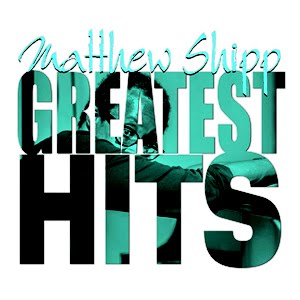
Matthew Shipp, Greatest Hits

Late next month, Matthew Shipp will release a Greatest Hits (Thirsty Ear 57205.2) compilation covering some of his best work from 2000 to the present. Eleven albums are represented.

And listening to this compendium makes at least one thing clear (if not many things): Matthew Shipp has been a critical force in the new jazz not by holding steady to the same routines and patterns that have made for new jazz orthodoxy, but by opening up to the sounds around him, by not following trends, but by making trends follow him.

So we have not only Matthew Shipp the masterful, innovative pianist, but also Matthew Shipp the composer, the conceptual innovator.

Listen to "Cohesion," by his trio of the time of William Parker and Gerald Cleaver, plus Khan Jamal on vibes and Flam on synths/programming. The drums have that drums n' bass sound--very funky but also electronically worked over. Yet listening to the piece you do not feel that this is Shipp gone commercial, any more than Trane's quartet sounded that way doing "Chim Chim Cheree." It's Matthew Shipp incorporating new elements into his music--but it's always foremost his music and not anyone else's, by any standards.

So throughout the compilation you get solo piano, trios, and larger configurations, fascinating to hear broken into a more-or-less chronological sequence. It's Shipp the pianist at the top of his conceptual game, the artist free to create with the great players he has surrounded himself with, free to evolve his direction as he sees fit.

That, as the late Sam Rivers defined it, is what "free" is about. The artist is free to follow what path he or she chooses, where the music swings, takes it out into open air, or works within hip-hop/funk/rock rhythmic feels, or records with a large orchestra. Listening to the thirteen years of music making so nicely represented on this disk, you feel that Matthew Shipp has been true to himself, and what that is speaks truth to us all. This is important music, pianistically, group-wise, compositionally and conceptually.

So grab a copy next month if you don't know these sides!

Thursday, November 15, 2012

Szilard Mezei Ensemble, BOT, 2004

After a bit of a break it's time today to look at the last in the batch of Szilard Mezei recordings on Not Two Records that I have been covering of the past few months. It is BOT (Not Two 818-2), one of Szilard's most ambitious offerings. Here we are treated to two full CDs of music recorded live in 2004.

It's a 10-member ensemble playing Mezei compositions and freely improvising around them. The band has a vibrant color, partly due to Mezei's writing/arranging, partly due to the instrumentation: oboe, bass clarinet/clarinet/alto, two trumpets, trombone, tuba, viola (Mezei), cello, doublebass and drums. So there is a potential contrast between and confluence of winds, brass, strings and percussion that Mezei makes use of in various creative ways as well as breaking out parts of sections to work together during solos and elsewise.

There is a lot of music to be heard, all of it worthwhile. The compositional/improvisational elements balance well throughout and the rhythmic feels vary from free to swinging and things in between.

This is/was a band that could and did make a statement via Mezei's compositional brilliance. It is a set filled with originality and excitement. I most certainly recommend it.

Monday, November 12, 2012

Alex Wyatt, There's Always Something

Thanks to Kickstarter, we have Alex Wyatt's There's Always Something (NOWT Records NOWT 006) to appreciate. It's a sextet playing Wyatt's compositions, Alex on drums, Kyle Wilson on tenor, Masahiro Yamamoto, alto and soprano, Greg Ruggiero on guitar, Danny Fox, piano, and Christopher Tordini, bass.

It's a set of players that have the subtle finesse and style to fit the pieces, which are new jazz mainstream--or in other words, the music is progressive-acoustic, well put-together, and the players know what to do. Alex's rhythmic sensibilities come into play in the compositions and in the grooves that weave around them. There are kicks and other rhythmic devices that give the music a jolt and show off Wyatt's fine drumming. But the melodic-harmonic content of the numbers is also compelling, with some nice twists.

I like Wilson's stylistically encompassing tenor. It compliments Yamamoto's contemporary stance nicely. Both Ruggiero and Fox weave some very attractive lines. Tordini's bass playing is distinctive enough that you can listen to what he's doing directly and get something out of it on its own, but of course what he's doing also fits in well with the music at hand.

Everybody sounds good and the tunes are quite interesting and unpredictable. It's an album you need to listen to a few times to get how nice it all is. Then you are there. I was. Thank you Alex.

Thursday, October 11, 2012

Fred Londberg-Holm's Fast Citizens, Gather

The latest CD from Fred Lonberg-Holm's Fast Citizens is a corker. It's called Gather (Delmark 2017). This is a coterie of Chicago jazzmen who can play, led by Fred who can also write. All but two of the numbers were written and arranged by Londberg-Holm and they work very well with the players at hand. The front line is a potent mix of Aram Shelton, alto sax and clarinet, Keefe Jackson at the tenor and bass clarinet, Josh Berman, cornet, and Fred, cello and tenor guitar. When backed up by the one-two thrust of Anton Hatwich and Frank Rosaly (bass and drums, respectively) this is one heady mix. There are group improvisations of an exhilarating kind, very good individual solo spots and arrangements/comps showing lots of imaginative creativity.

The group has character--every player is a fully developed improviser with a sound, and Fred uses that and their abilities to build impressive performances that are out and structured at the same time.

There is point in the final cut, "Roses" where it sounds as if everyone is on trumpet and that is pretty funny!! But otherwise this is seriously good avant jazz from strong players (and writers). It gets down to business carving out seven niches of exciting avant jazz, showing you why Chicago is still a major center for the music. Get this one by all means.

Thursday, September 6, 2012

Szilard Mezei Szabad Quintet, Singing Elephant

There are artists active today whose music unfolds before our eyes, whose every new release shows development and growth. Szilard Mezei, violist, composer and bandleader, is such an artist.

His latest focuses on his Szabad Quintet and is entitled Singing Elephant (Not Two 893-2). It's Szilard along with Peter Bede on tenor, Adam Meggyes on trumpet, Erno Hock on double bass, and Hunor G. Szabo, drums. It's a generous set of six Mezei compositions, played with concentrated verve by the quintet.

This is avant jazz to be sure, new-thing-like in the often freely articulated compositional renderings and in the collective/individual solos. Yet it has the distinctive mark of the Mezei approach. It is original. And it is a very good listen.

Each member of the quintet brings something to the music, Mezei's sometimes dark, sometimes astringent viola, Bede's full-bodied, full-ranged tenor, Meggyes' puckish horn work, Hock's expressively noteful bass foundations, and Szabo's intelligently free drumming. This is a band with a sound. And that is typical of Szilard's approach--he chooses players who work well as a sound-unit as much as they solo with individuality. And Szilard's arrangements pit various combinations of players together in contrasting and variable ways. The band manages to evoke some of the classical free jazz outfits of the '60s (NY Contemporary Five, for example) while forging ahead with where we are right now. Needless to say that makes for music I like to hear.

This is some very fine music. It's avant jazz with brains and edge. And it showcases Szilard Mezei's ever evolving approach. Very much recommended.

Monday, August 27, 2012

Jessica Jones, Mark Taylor, Live at the Freight

Here's something a little off the usual path: a quartet with the front line of tenor (Jessica Jones) and French horn or mellophone (Mark Taylor). Live at the Freight (New Artists 1052) gives you a generous program of Jones and Taylor originals recorded at the Freight & Salvage Coffeehouse, Berkeley, California, in 2011.

It's music that shows the oblique influence of everything from classic Tristano to Mingus's Jazz Workshop units, Wayne Shorter to the wide world of post-bop modern at large.

Jessica and Mark show a highly developed personal sound on their instruments, in part a product of interesting and varied backgrounds and in part sheer talent. Their writing is no less distinctive.

John Shifflet on bass and Jason Lewis on drums have a plasticity that goes well with the frontliners' vision, helping things come together well throughout the set.

It's thinking person's jazz. And it's very good. Recommended.

Friday, June 15, 2012

TromBari (Glenn Wilson, Jim Pugh), The Devil's Hopyard, Music of Thomas Chapin

Glenn Wilson, baritone sax, and Jim Pugh, trombone, form the nucleus of the band TromBari. For the project at hand they assemble a version of the ensemble that includes violin, cello, cello or bass, and bass, drums and percussion to play the music of the late Thomas Chapin. The Devil's Hopyard (Jazzmaniac JR3625) is the CD in question and it's something to be heard.

Glenn Wilson is a vastly underrated barimaster and Jim Pugh an excellent trombone counterpart. They are in great form here. The rhythm section kicks it all with lots of heat when needed. Josh Hunt's drumming is just right, very swinging with a great sound, and his counterpart Chris Nolte on bass is there, too. The duo give the music a great swing when needed. The string section of Dorothy Martirano, violin, Tomeka Reid, cello, and Armand Beaudoin on cello and bass, can solo collectively and/or individually and play the arranged parts with the proper straddling between new music tone and jazz inflection. Percussionist Matt Plaskota adds color to the mix in good ways.

The star attraction here is the Chapin music, two burners and the ambitious five-part "Devil's Hopyard Suite." They are compositions with grit; they swing and bop with fire and they go on to more extended melodic developments that get the ear to listen and appreciate.

Glenn and Jim give the music a leverage that makes this album especially excellent. They play their parts with conviction and they solo collectively and individually in ways that attest to their own prowess and their long-time association.

In short this CD has it all going, great compositional platforms played with authority, a horn & strings sound that puts this music in a league of its own, and the exuberant presence of two horn masters.

I hope this band does some touring because it is impressive and should be heard widely. The Devil's Hopyard delivers some excellent music that you should not miss.

Tuesday, June 12, 2012

The Clarinet Trio: 4 (Jurgen Kupke, Michael Thieke, Gebhard Ullmann)

Wind-only or horn-only ensembles rely as much as any conflagration on the distinctive sound of the instruments separately and collectively and the distinctive character of the pieces played. Without some special set of qualities things can begin to have a certain sameness.

The Clarinet Trio have all these things going for them. They deliver individual sonarity, a disciplined ensemble sound in a free-flowing context--and both compositions and improvisations that go far from the ordinary.

The new album, simply titled 4 (Leo 622) reflects the members's long association (since the '90s) and the unique makeup of the program. This is Gebhard Ullmann's baby in many ways. He plays bass clarinet in the ensemble and provides all but one of the compositional frameworks (there's an Ornette Coleman work; there are also two collective improvisations by the trio). Joining him for the distinctive group sound are Jurgen Kupke on clarinet and Michael Thieke on alto clarinet and clarinet.

Each composition is its own universe with written-out sections of great motor vibrancy contrasted by quieter moments of relative repose, notes deliberately played sharp by the ensemble for a blue note avant effect, different forms of articulation and dynamics.

The end results are striking. It's a trio with a sound like no other, playing music that is challenging yet appealing, that stretches from the bluesy roots to the newest avant branching off, Ullmann-style.

4 is one of the most interesting and exciting jazz wind ensemble recordings I've heard in years. There are ear-opening blends, a striking originality and a program of great musical ideas worked out with precision, freedom and passion combined.

Tuesday, May 29, 2012

David Bindman Ensemble, Sunset Park Polyphony

The David Bindman Ensemble, in their recent 2-CD opus Sunset Park Polyphony (self-released), follows in the footsteps of ensembles dedicated to modern jazz composition and adventurous improvisation. Like the ensembles of Henry Threadgill, Dave Holland, and Tim Byrne, this band's music has structured compositional elements interwoven with contemporary soloing that is not quite free in the sense of Ayler or Ornette, but neither is it tied into bop-lifting, according to the jazz detective I hired to investigate.

All humor aside (and perhaps it is already aside anyway) the ensemble has much going for it with Bindman's compositions, his alto and his tenor, plus Wes Brown on contrabass, Royal Hartigan, drums, Art Hirahara, piano, Frank London, trumpet and flugel, and Reut Regev on trombone.

This is Bindman's showcase and that of his ensemble. If they keep moving in this direction they'll have something. Perhaps they might free it up a little bit more often but that's just my gut reaction. Nice music.

Thursday, January 19, 2012

Bill Dixon, "Intents and Purposes," Beautifully Done Reissue of a Classic


Bill Dixon's Intents and Purposes (RCA) came out in 1967. It probably would have had a much greater impact had it stayed in print longer. By the early '70s it was only available as a hard-to-find, expensive import in the States.

Thankfully an excellent reissue has been made available to us by International Phonograph for the RCA reissue series. It has an LP style gatefold cover with the original art and liner notes, the CD is imprinted with the original label, and there is a paper insert with the liner notes updated for today. The remastering is excellent.

This was Bill Dixon appearing before the public as a startling trumpet master of avant sounds and a jazz composer of major stature. It's a mid-sized group for "Metamorphosis," a smaller group for "Voices," and trumpet and flute only for the "Nightfall Pieces." They seque together as a cohesive, massively innovative essay in evocative sound color. It is the fully mature Dixon and it is a masterpiece.

If we have the pain of losing Bill Dixon the living artist, we DO have the joy of hearing his music in recorded form. This one is essential!

Wednesday, October 12, 2011

Frank Carlberg's Piano and Compositions Come to the Forefront in "Uncivilized Ruminations"


Frank Carlberg is not just a new jazz sort of fellow. He's doing something actually rather new. If you start with the sort of angular abstractions Steve Lacy and Irene Aebi used to do, you get a stepping off point for where the music on Uncivilized Ruminations (RPR Red Piano Records) begins. Unfortunately the graphic design of the CD jacket makes whatever is on it unreadable, a too common result when there is no art director around to tell you that white and light yellow type cannot be read when knocked out of a light grey screen. Luckily the press release gives me the info I need.

It's Frank pian-izing in very interesting ways; Christine Correa handling the vocals with confidence. Then there's a well chosen mix of excellent instrumentalists in Chris Cheek (reeds), John O'Gallagher (reeds), John Hebert (bass) and Michael Sarin (drums). Everybody brings out the implications of Frank's compositions with attention to the musical structure and improvisatory inspiration.

And these are compositions to spend time with, substantial post-Lacyisms with enough well-arranged complexity that you get more the more you hear them.

Frank Carlberg has dome something very worthy here. Hear!