Friday, April 1, 2016
Matchbox, Jorrit Dijkstra, Pandelis Karayorgis, Nate McBride, Curt Newton
The one on tap for consideration today is a nicely expressive quartet date--Jorrit, Pandelis, plus Nate McBride on bass and Curt Newton on drums. The album is called Matchbox (Driff 1501).
This is a quartet that knows where it is going. The compositions, alternately by Dijkstra and Karayorgis, extend the legacy of Monk, Mingus and Dolphy with originality and both swinging and free-flowing architectonics of a pronouncedly geo-angular penchant. Every piece has a pronounced feel to it which the improvisations expand and capture in the jazz moment.
Jorrit opens up the color possibilities with the lyricon and a synth, and that sounds as right as the all-acoustic numbers. Curt Newton drums with smarts, swing and color. Nate McBride shows his formidable flexibility and ability to get where he needs to to make everything work. Then of course Jorrit and Pandelis each are artistic personages with their own special aural footprint, originals in full bloom here.
In the ten numbers featured on Matchbox we get an abundance of inspired avant jazz, some of the best around these days. There is an easy familiarity of the four that comes with a long period of interaction and so we get a chance to hear a seasoned foursome that can anticipate what everybody is doing and follow suit with their own corresponding conversational voice.
This one is a definite treat to hear. Outstanding quartectonics!
Wednesday, March 16, 2016
Ches Smith, The Bell
These are very modern effusions that owe something to the tutelage and "good ideas" Ches absorbed from Pauline Oliveros, Alvin Curran, Fred Frith and William Winant during his studies at Mills College. But then it is what he has done with the conceptual frameworks suggested to him by these luminaries that puts his music in a special place. The pieces were written with this trio in mind, with their ability to take the frameworks and create a spontaneous in-the-moment immediacy that blossoms forth here dramatically, strikingly with the special ambient sonic carpet created by Manfred Eicher's production.
Each of the trio members make for themselves a stylistic universe that meshes together in a three-way set of travels where all get equal space and all are distinctively themselves. It so happens, happily, that Smith's music serves the originality of the three especially well. So much so that it is difficult imagining another threesome playing the music, at least not the way it unfolds on the album.
There is an intelligent introspection to this music that has the ability to break out into more extroverted dramatics without breaking stride. That is the sort of seamlessness that this music embodies.
It is something that stands out and manages to be outstanding without calling attention to itself in the more overt ways. It is a special set. Impressively, so. Movingly, so.
If you happen to be in NYC on this March 25th, the trio is playing at the Rubin Museum of Art. Check the net listings for details.
Thursday, April 9, 2015
Nick Sanders Trio, You Are A Creature
It is one of those sets that keeps on sounding better the more you listen. The improvisations are very much integrated into the compositional structures so that they all have a through-composed feel that is not lacking in spontaneity and in-the-present presence.
Nick's piano style is brittle and almost playful. It is refreshing and very contemporary without quite sounding like anybody else out there. The trio does an excellent job realizing the music.
Sanders is doing something very musical and very involved. I am very glad to hear this one and will no doubt listen frequently. You should check it out. It's very good music!
Wednesday, February 11, 2015
Vijay Iyer Trio, Break Stuff
You can hear that in the latest outing, Break Stuff (ECM B0022567-02). He and his partners Stephen Crump on the double bass and Marcus Gilmore on drums are going somewhere, an original set of places. There is a looseness much of the time, coupled with polyrhythmic feels, minimalist openings in the firmament, sometimes with seemingly more than one tempo active, linear expansions on thematic, harmonic, and rhythmic elements, Strayhorn's "Blood Count" and Monk done in ways nobody else would think to do, original structures that can cook or they can clean the counter of pots and pans, as they feel it.
It is easy enough to say that Vijay's South Asian roots give him a special feel for rhythm. And something African in feel, too. Now that may be true but how that works out with his trio nowadays is not in any way automatic. There is a subtle channeling that all three are in on and it is very original.
An outstanding album, this is. They are touring the US February 19th through April 11. Eugene and Portland, Oregon, are the starting points, then New York, Albuquerque, San Francisco, Chicago and Boston. Check the net for more info. They are into something definitely "progressive," so now is a good time to hear them. And grab this disk!
Friday, January 17, 2014
Dennis Gonzalez Yells at Eels, Colorado at Clinton
This is thoughtful music but also music of excitement and fire. Dennis contributes four of the pieces; Aakash two. They are excellent table setters and sometimes they are part of the meal, too, so to speak.
Aakash is an old childhood friend of Dennis; this is a reunion after many years of separation. And the two work together very well, which I am sure was satisfying to them. Musically we all are beneficiaries.
Another excellent one from Yells at Eels.
Thursday, January 16, 2014
Frank Rosaly, Cicada Music
There's an excellent band in Rosaly on drums, piano and electronics, James Falzone, clarinet, Keefe Jackson, tenor sax, bass clarinet, contrabass clarinet, Jason Stein, bass clarinet, Jason Roebke, contrabass and cracklebox, and Jason Adasiewicz on vibes.
There are ten works to be heard. All in a way have something of the repetitive anarchy of cicadas, but never in any obvious ways. There are startling and engaging motives and some real ensemble colors to be heard with this unusual reed combination and what everybody is doing. And then of course there are some first-rate out-ish solos.
What I especially like is that you never can anticipate what is coming. It's totally without cliche and even without many of the reference points one might expect these days, though with all that bass clarinet going on with the vibes there is some very hip re-channeling of Dolphy, but again, not in any obvious way.
This one surprises but also confirms. Confirms that Rosaly and his compatriots are on some edge of newness. And it confirms that Chicago and new jazz go together as well as ever! Highly recommended.
Friday, October 11, 2013
Lina Allemano Four, Live at the Tranzac
The CD brings you a set of their music from the Tranzac club in Toronto. Each of the seven pieces was written by Lina, combining avant and post-hard-bop elements in ways that set up the improvisations well. Lina has something to say and says it. Brodie comes across with a piercing free-post-Bird passion that acts as a nice foil to Lina's extroverted brass effusions. The rhythm section works together very well throughout.
It's an album that gets better the more you listen. Lina Allemano has brass power. It's a good one to hear. Check this one by all means.
Thursday, September 19, 2013
Book of Three, Continuum (2012), Taylor Ho Bynum, John Hebert, Gerald Cleaver
Of course a trio configuration like this one gives all three artists a clarity of presence and exposes their playing in the most aurally transparent way. Bynum, Hebert and Cleaver rise to the occasion and create a very open, pulsating happy three-way coincidence.
They start out with a Bobby Bradford number, and one is immediately put in mind of the Bradford-Ornette nexus and the great music it has produced. But of course this is a trio with its own way so one then adjusts to the improvisational distinctiveness they bring to the music. The program goes on to feature compositions in a three-way collaboration, some solid Cleaver pieces and one each by Jim Hobbs and Salim Washington.
The play is the thing with these creative three, ultimately, and we are treated to some excellent interactions. All sound great, whether swinging along with a time element or diving into freetime excursions.
One comes away from a hearing of this disk with the desire to hear it again, and again. A sign that this is important music is that the luster never fades the more you listen. It only glows more brilliantly. This is one to hear, by all means.
Monday, August 5, 2013
Satoko Fujii New Trio, Spring Storm
Now what is interesting as ever with Ms. Fujii is that the trio is fully into the interactive piano trio zone with all three making this an intertwined musical statement. The second noteworthy part of this is how free tumultuous barrages alternate with open avant lyricism and pushing pulsation, often in the same number. Nicholson and Itani have much to offer and they come through in ways that further stimulate Ms. Fujii to dig in a little deeper, as it should be in this sort of outfit.
It is excellent Fujii, excellent piano trio new music-jazz, and it reminds you how important she is. Nobody quite has her outlook and she realizes it with style, grace, and fire! Listen to this one!
Monday, July 22, 2013
Rich Halley 4, Crossing the Passes
I'll put it like this, and right now it is a good criterion for how much I like something. Namely, if I were suddenly forced to move from my current space to a dinky studio apartment, would I bring Crossing the Passes (Pine Eagle 005) with me or give it to somebody who would appreciate it as part of the painful choices one sometimes must make? The answer is, it would go with me.
Why? Because this is music that lives. It has the open swinging qualities of classic Ornette, the music is now though, and the players are doing themselves, not somebody else. Clyde Reed makes a great pairing on bass with drummer Carson. Michael Vlatkovich is a great bonist, unsung maybe but right there at the top of the pack. Rich Halley plays tenor like a mother, and nobody else's mother but his own. The tunes, mostly by Rich with a few collective efforts, are where they need to be to launch the players.
Crossing the Passes swings its way out, freely, and it does it with artistry of the high kind. If you don't have any Halley, here's where you start. You will dig it. I am pretty sure!
Thursday, February 7, 2013
Angelica Sanchez Quintet, Wires & Moss
Angelica Sanchez is officially here to stay. She's played and recorded with Wadada Leo Smith and others, she put out a very nice solo piano album a while back (type her name in the index box to read my review) and she now returns with a quintet on Wires & Moss (Clean Feed 259).
There's a warmth to her freedom, compositionally and as a pianist, and it shows nicely on this disk. She's gathered excellent all-star caliber players in Marc Ducret, guitar, Tony Malaby, tenor and soprano, Drew Gress on contrabass, and Tom Rainey, drums. And she's put six of her compositions together for the occasion.
This is a band that can solo! And they do overtop the very hip-ly loose straight-eight free doings of the rhythm team.
The result is an extension of what she did/does with Wadada, free jazz-rock going considerably further in sophistication and complex running counterpoint than some of the heavier handed variety out there. Then Angelica will surprise you with some very advanced piano, lyrical and very creative, surprise you because it all fits together in her head but most leaders don't mix it up quite like this. New music meets meta-groove? Well, yes.
It goes a long way forward, miles ahead ahead. And it's very original too! Listen to this one a bunch of times and you will get there, in new territory.
Monday, December 17, 2012
The Nu Band, Relentlessness, Live at the Sunset, Roy Campbell, Mark Whitecage, Joe Fonda, Lou Grassi
When a very good band in the improvisatory arts achieves a certain comfort level playing together, in some cases that may take years, the music they produce when they are on the mark can be both very together collectively, and individually on a very high level.
That was certainly the case with the Nu Band when they recorded earlier this year at the Sunset in Paris. The resultant CD Relentlessness (Disques Futura et Marge 49) bears this out quite nicely.
For it has a great group dynamic going, loosely swings and speaks poetically and coherently, and gives you some of the best playing of Roy Campbell, Jr., Mark Whitecage, Joe Fonda, and Lou Grassi on record.
There are effective compositions by all the band members, and some sterling improvisations from the trumpet, reeds, contrabass and drums. Each artist is an original stylist of course, and the band has a direct kind of improv immediacy that comes about when all is right. This music, understandably given the players' deep roots in the music and long time immersion in it, is the evolution and extension of the new jazz, the new improv, as it stands today, state-of-the-art.
So naturally I would advise you to hear this one!
Friday, December 14, 2012
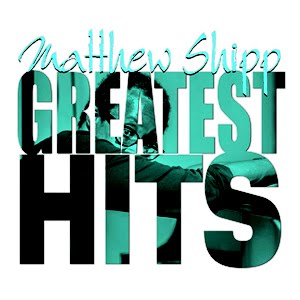
Matthew Shipp, Greatest Hits
Late next month, Matthew Shipp will release a Greatest Hits (Thirsty Ear 57205.2) compilation covering some of his best work from 2000 to the present. Eleven albums are represented.
And listening to this compendium makes at least one thing clear (if not many things): Matthew Shipp has been a critical force in the new jazz not by holding steady to the same routines and patterns that have made for new jazz orthodoxy, but by opening up to the sounds around him, by not following trends, but by making trends follow him.
So we have not only Matthew Shipp the masterful, innovative pianist, but also Matthew Shipp the composer, the conceptual innovator.
Listen to "Cohesion," by his trio of the time of William Parker and Gerald Cleaver, plus Khan Jamal on vibes and Flam on synths/programming. The drums have that drums n' bass sound--very funky but also electronically worked over. Yet listening to the piece you do not feel that this is Shipp gone commercial, any more than Trane's quartet sounded that way doing "Chim Chim Cheree." It's Matthew Shipp incorporating new elements into his music--but it's always foremost his music and not anyone else's, by any standards.
So throughout the compilation you get solo piano, trios, and larger configurations, fascinating to hear broken into a more-or-less chronological sequence. It's Shipp the pianist at the top of his conceptual game, the artist free to create with the great players he has surrounded himself with, free to evolve his direction as he sees fit.
That, as the late Sam Rivers defined it, is what "free" is about. The artist is free to follow what path he or she chooses, where the music swings, takes it out into open air, or works within hip-hop/funk/rock rhythmic feels, or records with a large orchestra. Listening to the thirteen years of music making so nicely represented on this disk, you feel that Matthew Shipp has been true to himself, and what that is speaks truth to us all. This is important music, pianistically, group-wise, compositionally and conceptually.
So grab a copy next month if you don't know these sides!
Friday, November 30, 2012
The Lou Grassi Po Band with Marshall Allen, Live at the Knitting Factory Volume 1, 2000
A couple of years ago Porter Records released a 2000 performance of an all-star configuration of the Lou Grassi Po Band Live at the Knitting Factory Volume 1 (Porter 4051). I am just (happily) catching up with it so I am sharing the experience with you, my much appreciated readers.
Lou is of course on the drums, the always incandescent Marshall Allen makes his presence vibrate on alto and flute, then there's Paul Smoker on the trumpet, Steve Swell on trombone, Perry Robinson, clarinet, and the late Wilber Morris on bass.
Needless to say this was a formidable gathering of avant jazzmen and I am glad to say the results live up to expectations. Three longish segments fill the disk: two collective improvisations and a Paul Smoker piece, "LouRa."
You could just listen to Lou Grassi on the drums and get something out of it. He is inventive rolling thunder personified. But everybody is onto the main stem in classic new thing ways so there is much to hear. The group improvs are sometimes extraordinarily tumultuous in part thanks to Marshall's patently raucous war cries as inspiration, but there are plenty of spaces less dense as well.
It's a very good blow-out that I would have been very happy to have caught live. For all that there is the document disk available as consolation. Avant fans will find this one very stimulating, as I did.
Wednesday, October 17, 2012
Szilard Mezei Vocal Ensemble, Fujj szel, Zenta, visszhangozz szel!, 2011
Today in our rough-and-tumble survey of the Not Two label releases by jazz composer-violist-bandleader Szilard Mezei, we come to an ambitious offering by the Szilard Mezei Vocal Ensemble entitled Fujj szel, Zenta, visszhangozz szel! (Not Two 883-2).
It's a full disk of Szilard's large ensemble doing five of his pieces. Kinga Mezei presides as vocalist and she has a hearty, earthy voice that carries nicely over the ensemble and sounds quite lovely as well. The ensemble for this outing is Szilard on viola plus Rankovic on alto sax and bass clarinet, Bede on tenor sax and clarinet, Burany on baritone and soprano, Aksin on trombone, Aleksic on piano, Papista on tuba, Malina on doublebass and Csik on drums.
It is a lively blend of musical colors that Szilard makes full use of, and there are solid avant improvisers to take the spotlight and carry the day when needed.
The disk stands out for its very intriguing, substantial large ensemble new jazz compositions, the distinctive sound of the band, Szilard's working of traditional Hungarian, eastern European folk elements into the mix here and there, and the improvisational heft of the band as a whole.
It is music that is very original, and as such difficult to describe in words. It's very beautiful, and this is an excellent album. If you are looking for something different on the new jazz scene, here it is!
Wednesday, September 19, 2012
Arts & Sciences, New You
From out of Oakland, California comes the ensemble Arts & Sciences and their CD New You (Singlespeed Music SSM-0010). It's eclectic and electric with keys (Michael Coleman) tenor sax and effects (Matt Nelson), alto sax and flute (Jacob Zimmerman) and drums (Jordan Glenn) comprising the ensemble.
This is composition-centered prog jazz. The press sheet cites Sun Ra, Tim Berne and the Curtains as influences, but one might also detect a sound that reminds a little of later Soft Machine as well as perhaps a little Zappa.
There are some nice odd-time-meter riffs, contrapuntal line weaving, freebop linings, a little of the heft of rock and overall a genuinely creative approach. It's less directed toward solo than ensemble, but that works given the ambitious compositional content.
This is seriously good music that's worth your time.
Wednesday, June 27, 2012
Dave Mihaly's Shimmering Leaves Ensemble, Eastern Accents in the Far West
Time for something a couple of years old, from 2010, that's worth considering. It's drummer/pianist Dave Mihaly, a former student of Barry Atschul (as I am) and Andrew Cyrille, and a weaver of musical composition. The disk at hand features his Shimmering Leaves Ensemble. The album is called Eastern Accents in the Far West (Porto Franco 016).
The band is Dave plus Ara Anderson on trumpet, bass trumpet, sousaphone and drums, and David Boyce on tenor and drums. Dave and band's decision to go with 14 shorter cuts gives the album a fast pace, with everything from Trane-Elvin swings, to post-AEC funk to free-flowing essays with thematic guideposts.
Dave sounds very loose and creative on drums; Ara and David have earthy, limber avant sounds and attacks on their respective instruments.
The sheer variety of compositional-improvisational feels and the concise nature of each track makes this album easy to digest and quite pleasurable. Like the best of the AACM artists, these are players with a sound personality and an ensemble with bite and tang. Nice work!
Friday, May 11, 2012
Ran Blake with David "Knife" Fabris, Vilnius Noir
One thing about pianist-recomposer Ran Blake: you can depend on him as one of the most active and creative harmonic-pianistic personalities of our age. He takes familiar song material and in many ways recomposes each to suit his wide sensibility. His is a freedom of nuance, a freedom of recreation. If anything that propensity and talent has deepened as he gets older.
You can hear this clearly on the new LP-only release Vilnius Noir (No Business NBLP 45). He is joined for much of the album by guitarist David "Knife" Fabris. The chemistry is excellent between the two, with Mr. Fabris paralleling Mr. Blake but coming from a slightly different melodic world (that more conducive to the guitar), and so there is a kind of creative frisson that you can sense in their interactions.
The Blake solo spots are equally worthy. As usual with Ran Blake's repertoire, you never know what he might transform-improvise around. This time out there are some obscurities, some Ran Blake improvised compositions and the more expected-unexpected songs and compositions, like Stevie Wonder's "My Cherie Amour," Michel Legrand's "Watch What Happens," George Russell's "Stratus funk"--a good mix of familiar and less-familiar.
It's Ran Blake at his best and David Fabris sounding great against Ran's full-backdrop and inimitable direction. Listen by all means. No Business is putting it out in a 500 record edition so get to it before it goes OOP!
Tuesday, May 8, 2012
The October Trio, New Dream
The advanced contemporary pianoless jazz outfit today has become something different than it once was. The classic Sonny Rollins trio of the late '50s, for example, essentially proceeded as a piano-included quartet might at the time, only the space freed up by the absence of piano comping/chord spelling allowed the soloist more freedom and the rhythm section to loosen up and play more densely, to simplify the matter greatly.
By the time a group like Air was flourishing in the '70s, the entire trio had more compositional roles to fulfill in addition to the solo plus flow and momentum mode.
A group such as the October Trio is an heir to that legacy, as you can readily hear in their recent CD New Dream (Songlines 1593-2). It's Evan Arntzen on tenor, soprano and clarinet; Dan Gaucher, drums; and Josh Cole at the contrabass. They roll effortlessly through a series of originals that give pride of place to the group arrangement, a free looseness and multi-improvisational roles to all three members, often simultaneously.
The playing is quite good as are the compositions, which range from free-declamatory to free-rock.
This is a band to watch, a band to hear. The album shows them to have a sound well on the way to maturity, a music that combines the flair of freefire with the musicality of distinctive part-arranging.
Check this one out, by all means.
Monday, February 20, 2012
Tim Berne, Snakeoil, 2012
The best thing he's done in years. Tim Berne's Snakeoil (ECM 2234). It's a quartet. Tim on alto, Oscar Noriega on clarinet & bass clarinet, Matt Mitchell, piano, and Ches Smith, drums.
The music? It's a seamless integration of composition, improvisation, and compositional improvisation. There are six separate pieces that more or less flow together as movements in a single work. Chordal improvisations on the piano turn into a compositional-improv for alto and piano, drums come in, and it's on from there. Mr. Berne has put together music where the written and the improvised are so much of a piece that it has a continuous inspirational feel to it, where nothing is tossed into the mix that is not somehow a meaningful part of the whole. The harmonies sometimes modulate continuously so that pitch centers get multiple, Mitchell's piano part often has a centering role that the two reeds circle around and through, reeds improvising their way into another motif or two-part counterline, either of which sometimes seems to expand outward improvisationally and/or compositionally, the piano joining in obliquely or directly. Ches's drums can pulse or color according to the moment. He artfully sets off the music.
It's a remarkable work that puts an ellipsis where much improvised music puts a period or exclamation point. It is perpetuum mobile music at times--continually flowing outward only to find itself back where it was and outward again. Then next thing you know that figure regularizes into a series of riff-motives for a soloist to soar over.
This is music you should hear.


.jpg)
.jpg)