Showing posts with label modern improvisation. Show all posts

Wednesday, July 18, 2012

Jonas Kullhammar, Torbjorn Zetterberg, Espen Aalberg, Basement Sessions Volume 1

Creative modern improvised music has become a world phenomena. Anyone who listens to the total output in the genre in the last 20 years will be impressed, surely, with the development of players young and old who call the United States home, but the rest of the world is producing very good to excellent players in increasing numbers.

It's of course been true of Europe for a long time. Today we look at a sax trio from Northern Europe, and what they did in a set titled Basement Sessions Volume 1 (Clean Feed 246). It's Jonas Kullhammar, tenor and baritone, Torbjorn Zetterberg, double bass, and Espen Aalberg on drums.

Kullhammer has been making a name for himself in a series of recordings. He sounds especially primed on this one. He has sound and he does vertical invention with fluidity and soul. Perhaps the very lively collaboration of his rhythm team-mates inspired him to take things further. Zetterberg is a richly toned, very together player; Aalberg has drive and push on the drums.

It's bluesy, modal, well-heated fare. The blowing vehicles are just right for the blowing that's going on. It's a very good showing from three very promising and together improvisers. It has roots but it blows over them with immediacy. So there you are!

Wednesday, February 29, 2012

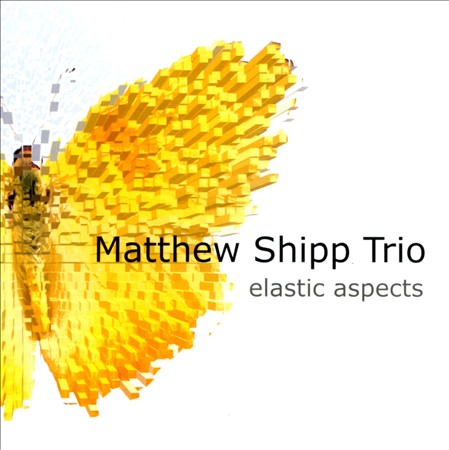
Matthew Shipp Trio, Elastic Aspects


The Matthew Shipp Trio today are a group like no other out there. Why? Because each of them have played through the bumps and jolts of the initial dues-paying period and ultimately triumphed as players of themselves. Surely there are influences, but as you listen to their new recording Elastic Aspects (Thirsty Ear 57202.2) you hear a group of artists who have become tempered in the fire of the scuffle to become their own instruments of expression. Matthew probes and hammers out his own vocabulary, new thing, repeating figures, harmonic-melodic vertical-horizontal aspects that come out of roots and branch upwards, rhythmic diversity, inside-the-piano extensions. Michael Bisio prods the bass with punctuated hammering, walks smartly like he is sure of the goal, plays arco with an individually distinctive tone and projective phrasing and fits into the group situation with his own version of what to do. Whit Dickey has his own version, too, in his case of the drum tradition and how it can be extended, whether it be in the playing time mode or with cascading freedom, and the grey areas in between.

There are 13 improvisational excursions on the album, each distinct. There are unaccompanied solos, duets and full trio segments. They fit together as pieces of what is NOW. In the end you get a very creative take on the new piano trio and how, in Shipp and Company's hands, it goes where it will and owes nothing to anybody. You can build, they seem to say, your own musical personality as individual and as a group in the full heat of the battle to survive and prevail. They do that here.

It is one of the important piano trios operating today. You cannot afford to miss them.

Wednesday, January 4, 2012

Jason Kao Hwang/Edge, "Crossroads Unseen"


As we saw with Jason Kao Hwang's Symphony of Souls, a remarkable work for improvising string orchestra (see my review from last November at my classical music site: http://classicalmodernmusic.blogspot.com/2011/11/jason-kao-hwang-spontaneous-river.html), Jason is in a very creative phase. Concurrent with that release is an album with his smaller quartet ensemble Edge, Crossroads Unseen (Euonymus 02). This is an outfit that has been maturing with age since its founding in 2005, something like a fine wine, and the album shows how far they have gone. The group is a worthy match of Jason on violin and compositions, Taylor Ho Bynum on cornet and fluegel, Ken Filiano on contrabass, and Andrew Drury, drums. Each is known to be one of the most creative improvisors on his instrument and with Hwang's provocative and quite exceptional compositional framework things gel exceptionally well here.

It's the confluence of sound colors and zen-like musical concentration that makes this more than a mere gathering of heavies. The contrasts of open horn versus muted, pizzicato versus bow, mallets versus sticks, long notes versus movement, ensemble versus solo, all are given maximum torque with Jason's writing. It's not chamber jazz per se but it takes the idiomatic exceptionalities of each player and harnesses that (like Duke did) to a compositional vision.

There is so much going on at any given moment on this album that listening repeatedly is the only sensible way to begin to appreciate the conceptually innovative freedom that the band works out before our very ears. This is music that is more than just good; it's exceptionally so. It's one of the more important recordings of last year--Maestro Hwang is on the creative edge of the new improvisational music. If you are serious about knowing what's going on today you cannot afford to miss this one.

Friday, November 25, 2011

Harris Eisenstadt, September Trio


With Paul Motian passing away recently, he is on my mind. As I listen again to Harris Eisenstadt's latest, September Trio (Clean Feed 229), I am reminded of Paul's drumming and the sort of music the first Jarrett Quartet and Motian's own groups made. Not that Harris is copying. But his drumming, his composing, his group sound here is in a lineage that in some ways has evolved out of those milestones of our more or less recent past.

But September Trio stands on its own in an excellent way. The compositions are strong, Ellery Eskelin sounds great (with a hint of Dewey Redman here) and Angelica Sanchez comes through with a rubato creativity that does have some relation to early Jarrett, but expands outward with some beautiful voicings and note poems.

Three accomplished players, three strong concepts, carefully thought-out Eisenstadtian music. This has a cantabile quality and a thoroughgoingly modern lyricism. Beautiful music! Harris comes up with another winner on this one!

Wednesday, November 2, 2011

The David Arner Trio: Out/In the Open, 2007


Pianist David Arner is a musical voice that does not fit easily into the various schools of improvisation that are widely influential among the free school of players. He's managed to forge a path that does not cross directly the Cecil Taylors, the Paul Bleys, the Keith Jarretts, or the Bill Evans influenced players. Not that he has ignored these stylistic landmarks. Clearly not. But he chooses to go his own way.

You can hear that quite readily in the 2007 recording Out/In the Open (Not Two 812-2). It's a trio date with the formidable alliance of Arner with bassist Michael Bisio and drummer Jay Rosen, all key institutional-foundational figures in the creative improvisational music of the present era. The album's hour-long program features four collective improvisations, an Arner composition ("Intensities") and a standard ("My Romance").

There is remarkable piano trio interplay throughout. Rosen listens creatively to what Maestros Bisio and Arner are doing and gives out with the coloristic energy washes that he does so well; Bisio is alive with noteful counter improvisations to Arner's forward-pressing expressions; and David unleashes the full spectrum of the music he hears, which engages the jazz tradition, the expressive intensities of the avant, the expanded harmonic, melodic and textural potentialities of the piano and the musical ideas he has in abundance.

It's a documentary testament to what these three imaginative players can achieve in the space of a single session. And it's a sterling example of Arner pianism at its best.

Highly recommended.

Thursday, October 13, 2011

The Red Trio Back For Their Second Album: "Empire" with Guest John Butcher


When it's a matter of new, outside free-jazz ensembles, not all that many can afford to stay together for a second go-round. The Red Trio have. Their first came out in 2010 on Clean Feed (see review from April 5, 2010). It was quite lively and showed much promise.

They return with the vinyl-only release Empire (No Business NBLP 37) in a limited edition of 400. That is a good thing because this is some very well-executed outness. Rodrigo Pinheiro (piano), Hernani Faustino (bass) and Gabriel Ferrandini (drums and percussion) are joined this time out by tenor-soprano man John Butcher.

The addition of Butcher adds another significant voice to the dialog. The three pieces find the augmented trio (quartet) in total control over the exuberant chaos they conjure up. Each player contributes his eloquent avant voice to an ever-shifting, pulsating mass of sensuous, energetic collage. This sort of free music is quite difficult to play well (in spite of what you might have heard). The four of them DO it well. They get the coloristic punctuations just right with a kind of total synchronism that can be thrilling to behold. This music does not swing in the conventional sense. But the ins and outs, the entrances and exits of each player when done right (as it is here) is its own sort of out-of-time swing. And they have that quality without exception.

The Red Trio (and John Butcher) outdo themselves on this one. Immerse yourself in it and you will come away with a big smile on your face! Highly recommended.

Friday, July 22, 2011

New York Encuentro: Blaise Siwula in Excellent Form with K. Itakura and R. Gilman-Opalsky


Now that what was once called the "new thing" is nearly 50 years young, we have a chance to assess what has gone on so far. Not today, however, since as I write this New Jersey is headed toward 100-plus-degree weather and my office is rapidly becoming an oven with yours truly as the tuna casserole. Nevertheless there are substyles in "free" improv that are well marked out and players are working within the various parameters with increasing economy of expression and a kind of certainty years of experimentation and musically genetic drift have made possible.

The trio of Katsuyuki Itakura, piano, Blaise Siwula, alto and tenor saxes, and Richard Gilman-Opalsky on drums serves as a good example. New York Encuentro (No Frills Music 002) finds them in a free-blowing set that has the consistency of music by players who know where they are coming from, know where they want to be, and then get there.

Itakura comes out of the Cecil Taylor school of pianistic all-overness. He's quite good at keeping the lines and clusters coming. Gilman-Opalsky has the Sunny Murray-and-after freetime drumming down and interacts well with the others. Then there is Blaise Siwula. He has a way of his own that relates to what has gone before but does so in ways that are endlessly inventive. It's not so much a timbral sound sculpting that goes on with Blaise on this set, though he does of course have a sound. It's the way he keeps coming up with lines of interest, setting up a dialog especially with the piano, laying out line after line of musical improvisation with a lucidity of someone who knows what he is about...that is what makes New York Encuentro music well worth hearing.

Friday, April 8, 2011

Delmark Now Distributes Sackville Records; Roscoe Mitchell's "Quartet," 1975

Good news for modern jazz appreciators: selected titles in the legendary Sackville Records catalog will now be available through Delmark. It involves the avant jazz catalog and, so I hear, may eventually include unreleased recordings.

In keeping with the welcome turn of events I'll be looking today at one of the early Sackville masterworks, Roscoe Mitchell's 1975 live recording Quartet (Sackville SKCD2-2009). I've had this recording on vinyl since it first came out, so I view it as an old friend. For the purpose of today's article I have to step back a few paces and try to hear it like it was a new experience. I must say that it sounds as fresh today as when I first heard it.

It's a bassless-drummerless ensemble that operates in a zone that does not stress rhythmic periodicity. So one could say that it is in a kind of "new music" realm--not classical necessarily, but the kind of chamber composition-improvisation that Roscoe and his AACM associates would so successfully explore during this and successive periods. Do not expect a swinging version of "Odwalla," then. It is a difference that makes a difference and distinguishes this on the whole from a typical Art Ensemble date from the era. That is not to say that the music is any more--or any less compelling. And it IS compelling.

This is a quartet of some definite significance. There's Roscoe on soprano, alto and tenor sax, Muhal Richard Abrams, piano, George Lewis, trombone, and Spencer Barefield, guitar. Mr. Barefield is quite effective on this and one can only regret that he has been somewhat underexposed. The rest of the players all should know of course. The four have a rapport that comes out of common dedication and mutual respect.

There are four pieces on the recording; three by Mitchell ("Tnoona," "Cards," and "Olobo") and George Lewis's "Music for Trombone and B-Flat Soprano." All are in the high realm of the keenly expressed compositional-conceptual-improvisational mode for which Roscoe and company have become so deservedly known. It is a high point of the era and an interesting contrast to the Art Ensemble brand of excellence that was flourishing at the same time.

If this album is less touted than some more-or-less similar endeavors of the '70s, I believe it is because the Sackville recording has not been as readily available as some of the others over the last 35 years. With Delmark now involved in getting this out that I hope will change.

Needless to say this one is most heartily recommended.

Wednesday, April 6, 2011

Matthew Shipp's "Art of the Improviser": A Strong Voice Takes Center Stage


After a number of years as a key member of David Ware's Quartet, Matthew Shipp has found his own pianistic voice and brings it to the forefront on the new 2-CD set Art of the Improviser (Thirsty Ear 57197).

Matthew shows two facets of his playing on this set. The second disk is a live solo piano spot. It gives you Mr. Shipp the creative harmonic-melodist, a very inventive, musically imaginative improviser who makes music that stays in the mind.

The first disk too is a live date, this time with his new, formidable trio of piano plus Whit Dickey on drums and Michael Bisio, bass. Here we experience memorable compositional vehicles that open the way for inspired virtuoso bass work, barrages of quietly hip drumming in and out of time, and Shipp, the man who works in an advanced zone with his own take on the improvisatory tradition. You hear influences well transformed to suite his expressive needs, and an emerging original voice on the verge of greatness.

Both disks give you a bird's-eye view of creative work in progress, of the Shipp approach as it is evolving, of a trio that already creates goodly magic but can be expected to grow as they continue together.

I would venture to say that each disk ranks among the most interesting and important work being done right now in the solo and trio fields of improvisatory music. This is new music in the best sense of the term. It is music to be digested and understood over time, not an immediate toe-tapping kick in the teeth. Miss it and miss something vital in today's music world.

Tuesday, March 15, 2011

Szilard Mezei and his Szabad Quartet, "Februari Fadontes"


Szilard Mezei, Hungarian violist-composer-bandleader has been as prolific as he has been interestingly progressive. A look on his website reveals quite a few albums released under his leadership. I've only heard and reviewed a few for Cadence, but what I heard on those convinced me he was someone to watch.

The new one, a limited-edition LP release, features his Szabad Quartet and is titled Februari Fadontes (No Business NBLP 28). The several previous albums I have reviewed tended to have a dark palette, with the lower register holding a very active place in the mix. In contrast Szilard's Szabad Quartet has a bit more of the full range, thanks in part to the instrumentation of viola plus the tenor sax and clarinet of Peter Bede, the bass of Erno Hock, and the somewhat bright drumming of Hunor G. Szabado.

This is a free-form date with plenty of room for four-way interplay between the band members. Mezei has his own way with the viola, and Bede plays a tenor and clarinet in ways that aren't typical--free-form but mostly pure-toned. Hock and Szabado (bass and drums) have an important presence and give depth to the floating suspensions and brooding meditations of Mezei's music.

This is music that does not wear influences on its sleeve, so to say. It's quite out of the norm and holds a musical interest that only increases with increasing familiarity. Mezei is fast-proving himself to be one of Europe's unique avant jazz voices. This is a good one to check out to find out why. I'll leave it to you. With only 300 copies pressed in this limited vinyl offering, you may want to grab it quickly.

Wednesday, March 2, 2011

Dottie Grossman and Michael Vlatkovich Collaborate on Word and Music Project


Dottie Grossman puts together short prosaic poems dealing with Zen-like slices of everyday life, friendships and day-to-day reflections on it all. Michael Vlatkovich is a noted trombonist-bandleader in the avant improvisation realm. The two have collaborated on a CD project that alternates Dottie's short poems with equally short improvisations by Michael's quintet. Call and Response and Friends (pfMentum 060) is the intriguing result.

Each segment lasts from one to two minutes, Dottie then quintet in alternation. The constantly refocused, straightforward yet cognitively labyrinthine prose-poetry recitations set up an expectation that is realized in equally varied musical comments by the group. There is freedom; there is focus.

It works completely because Ms. Grossman and the Vlatkovich conflagration are well attuned to one another. Something like this could quickly become pretentious, over-reaching, self-affirming in a kind of conceited aren't-we-artists sort of way. The fact that it all is most certainly NOT has to do with the unprepossessing and almost casual (deceptively perhaps) image-weaving that takes place between the two creative forces.

It is NOT an uneasy melding of prose-poem and jazz. It is an EASY one. Very much recommended.

Friday, May 21, 2010

Kiva Presents Some Advanced Ensemble Improvisations


The group Kiva goes way back to 1975, when American trombonist/violinist John Silber and Franco-percussionist Jean-Charles Francois co-founded the ensemble at the Center for Music Experiment, University of California San Diego. Judging by the recording at hand, they created some very formidable group improvisations during the 16 years of their existence.

The self-titled two-CD set released on Pogus Productions documents four moments in their history: three lengthy musical discourses from 1985 and 1991, and a tape collage of various group performances assembled and re-realized by John Silber.

Essentially the group as represented here consists of the founding members plus Keith Humble on piano and synthesizer, and Mary Oliver on violin and viola for one of the performances. The collage segment seems to include additional members, which were often culled from students at the university.

That deals with the basic logistics. The music is what matters, of course. And the music is quite challenging. It is a series of excellently executed abstract improvisations that owe something to MEV, AMM, Il Gruppo and the improvisational ensembles led by Stockhausen, more so than the music created by, say, Albert Ayler or Evan Parker. This is more on the new music end of the spectrum. It isn't so much jazz-related.

They are in excellent form, whatever the stylistic parameters. The double CD set gives you a very generous amount of music and I must say it is all of a very high provenance. There is a sensuous revelling in the sound universes created. Nothing seems academic in the pejorative sense (a sense I do find a little disturbing, but yet I evoke anyway).

Kiva is an ensemble that could have easily been missed, I for one am very happy to have gotten the chance to hear them on this release. Highly recommended.

Thursday, February 4, 2010

Minamo Blurs the Distinction Between Composition and Improvisation


Minamo teams violinist Carla Kihlstedt with pianist Satoko Fujii. These are world-class musicians, accomplished instrumentalists, composers, improvisers. The two-CD release Kuroi Kawa~Black River (Tzadik) provides a birds-eye aural view of the duo live and in the studio.

You will hear wildly creative improvisations for violin and prepared piano, for example, as well as rather carefully crafted compositions of expressively wrought sound worlds. The duo makes a musically cogent argument in favor of the increasingly reasonable proposition that today's "serious" music need not draw sharp dividing lines between improvisation and composition. On one level this is rather obvious and not really a new idea. On another level there is new found currency in the working out of a viable synthesis between "New Music" coming out of the concert-classical camp and "Improvisation" that has evolved from the avant jazz arena. Of course the two stylistic approaches have much in common and their combination can generate fruitful creative results. That is dramatically shown on the disk at hand.

Kuroi Kawa provides the listener with a very interesting and listenable recital of modern chamber music. It is both a musically stimulating experience and a tribute to the formidable musical minds of Carla Kihlstedt and Satoko Fujii.

Monday, January 11, 2010

Samuel Blaser, His Trombone, His Quartet

Samuel Blaser is not somebody I am very familiar with. He plays an impeccably solid balladic trombone, at least on his Pieces of Old Sky CD (Clean Feed). He is well served by his quartet, which includes Todd Neufeld on electric guitar, Thomas Morgan on contrabass and Tyshan Sorey on drums. We took a look at the latter's Koan in the August 19, 2009 posting of my Gapplegate Music Blog at http://www.gapplegate.com/musicalblog.htm. That CD has Sorey, Neufeld and Morgan minus Blaser.

Like Koan, Pieces of Sky has meditative moments and a kind of sprawling free balladic style that owes something to Charlie Haden and Paul Motian's earlier work, though not in any direct sense. Blaser's trombone builds expressive musical sequences that are a pleasure to hear and the trio gives a subtle, nuanced accompaniment.

It's not all balladic though. "Red Hook," for example gets a head of steam going and Todd Neufeld sounds terrific combining unusual chording and impassioned single lines.

This is a record that deserves your attentive ear. Blaser genuinely contends as a trombonist deserving recognition and the trio has something good to say musically. Recommended.

Wednesday, December 16, 2009

Satoko Fujii, Japanese Free Piano Powerhouse

Music aficionados in the United States don't always pay enough attention to what's happening in the rest of the world. Take Japan as an example. There is much going on over there, yet many of us don't really know much about it. Tzadik Records' New Japan series begins to rectify that lack, and we've covered a few of those releases in the various blogs in the last year or so.

Today we look at another one: Satoko Fujii's piano trio-duo-solo record Kitsume-bi. Fujii has magnificent ideas, a huge ear for the possibilities in free piano improvisation, and a style that does not have a derivative foundation. She goes her own way.

For the date she is joined by the always interesting Mark Dresser on bass and the explosive Jim Black on drums. For several cuts Sachi Hayasaka appears on soprano sax, and it's clear from those numbers that Sachi needs to be heard more over here.

But this is Satoko's show. There are some really compelling group presentations to be heard. Like the straight-eight motor-manic section of "Past Life," where a Pandora's Box of eighth notes spin wildly from Fujii's piano while bass and drums provide counter ballasts of sound parcels that contrast as well as complement.

Ms. Fujii has a sureness of execution and a confidence in her own stylistic parameters that translate into controlled yet at times wildly exuberant music, other times (especially in tandem with Ms. Hayasaka) ponderously reflective.

One ignores Satko Fujii at one's own peril. If you miss this CD, you miss a music making document that can be your personal blueprint for what's good about the improvised world today.