Friday, December 9, 2022

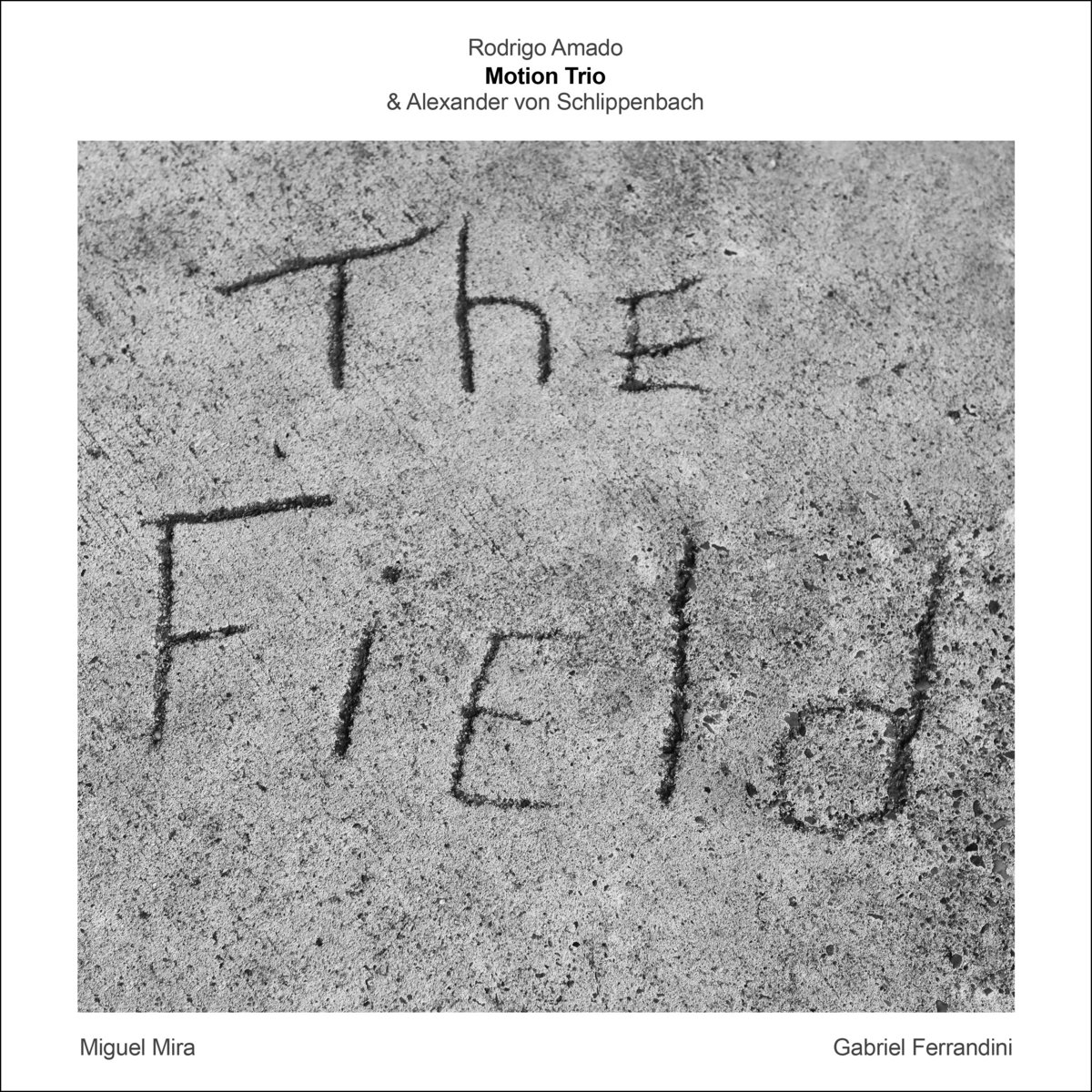
Rodrigo Amado, The Field, Motion Trio, Alexander von Schlippenbach


Some artists are so situated in the music today that it is a good idea to catch ALL of the releases if you can, because each is likely to catch lightening in a bottle. Looking back on these pages I have covered a good deal of the albums featuring Portuguese tenor sax master Rodrigo Amado. And each has something central to contribute to the Free Avant Jazz scene as we live it now. He is one of those do-not-miss-anything artists for me.

So naturally I made note when a new one came out recently. The Field (NoBusiness Records NBCD 141)  It is one long live improvisation for Amado and his Motion Trio that includes Miguel Mira on cello and Gabriel Ferrandini on drums, both laying down a nicely open free rhythm section wash, with inventive fullness that goes against it all in ways that egg the whole of it on.

An important instrumental addition for this set is the Free Jazz ace pianist Alexander von Schlippenbach who forms an altogether prime contrast line and chord spelling nexus between his own self and the trio, especially Amado. They articulate a wonderful pairing off and pairing on together again as the music proceeds.

In the end we have another gem with Amado and company in a fine fettle indeed. It speaks well of the health of the Free Jazz scene. But more of that in the coming weeks. Enjoy this one!

Tuesday, November 22, 2022

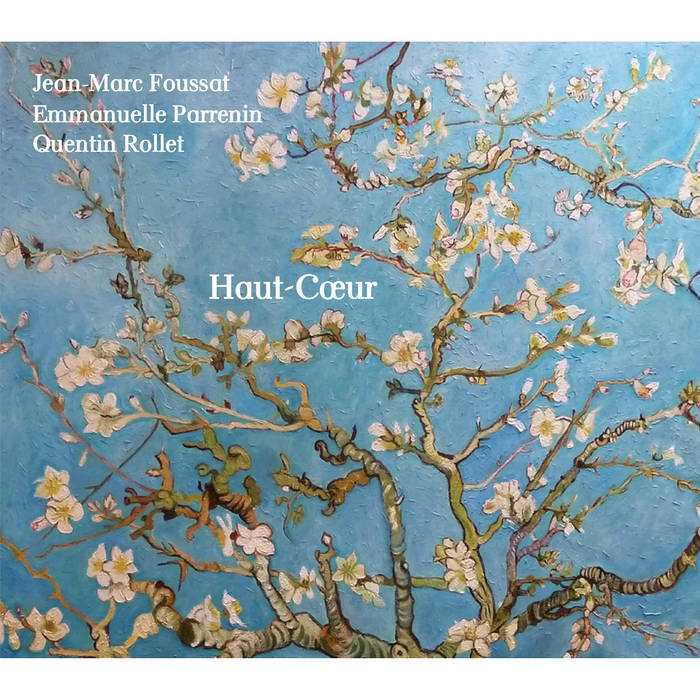
Jean-Marc Foussat, Emmanuelle Parrenin, Quentin Rollet, Haut-Coeur


I have appreciated for a long while the electronic and acoustic improvisational inventions of Jean-Marc Foussat and friends. There is a recent one he kindly sent me and I have been appreciating it. It is his electronics, voice and sounding of toys along with Emmanuelle Parrenin on hurdy-gurdy and voice, and Quentin Rollet on alto and sopranino saxes and small electronics. The album is entitled Haut-Coeur (Fou Records  FRCD 42).

The program presents a magical series of soundscapes  that majestically blend the three improvisers into some remarkably poetic sequences, with drones and thickening bands of  sound that do not seem like typical electroacoustic improv these days, but instead plummet the aural depths of possibility with a pronounced abstract narrative more long-toned than pointillistic.

In all this Foussat and company bring us a kind of epic presence which in its own way furthers the High Modernist improvs of electroacoustic masters of the '50s and beyond, the pioneering Musica Electronica Viva, AMM, the improv groups of Stockhausen in that fruitful phase of his music,  and Il Gruppo. In their own way the trio here, and Foussat in a remarkable series of electroacoustic records for his Fou label, all carry and extend the assumptions of the earlier groups, to improvise in ways somewhere straddled beyond Avant Jazz and New Music concert stylings. But then again the first and then the final drone section have a more cosmic ring to them than some of those early Improv-Electroacoustic sides, excepting Il Gruppo on some wonderful moments. But it is only natural that we should hear further evolution happening as we go along. Foussat remains a central force in it all today.

Do not fail to give this one your full attention. Bravo!

David Haney, Circadian World Clock, with Bernard Purdie


David Haney is an Avant Jazz pianist who has gone his own articulate way over the years and is not afraid to strike out boldly on his own path, neither quite following a splatter all-over of a Cecil Taylor or a post-Ornette-fielding of a post-Bop swinging of a Paul Bley.


The album Circadian World Clock (Big Round BR8970) comes out of the experience of the Pandemic and the kind of global feeling of togetherness in temporal isolation that is and has been a peculiar and unprecedented feeling we all share, we who are still increasingly experiencing world simultaneity in the digital toposphere these days. The temporal and audio periodic structure of this album follows a unique set of specifics. David requested from a wide array of world musical artists a short field recording from a particular time of day.within the realm of the ritual temporal sequences of traditional church worship cycles.

To each of these times comes a short field recording from various parts of the world, so there may be a traditional music from for example India, or perhaps an outdoor recording of everyday urban or natural sounds. A set of such sounds in a time sequence are chosen and played as backdrops for a particular live ensemble to improvise over. Each ensemble consists of Haney at the piano playing in traditional or extended manner with Bernard Purdy at the drums and one or more additional ensemble players, with the max including a four-piece brass-wind quartet and an auxiliary percussionist. 

The musical response ranges from ultra-Free to harmonic-melodic concordance or motif contrasting. The music and soundscape elements continually fascinate and center around Haney's remarkable inventions on piano and the always fascinating sound colors of the ever evolving whole. Purdy manages to play Free without channeling Sunny Murray or Rashid Ali, and so interestingly holds forth here at times in ways that cast a spell over your ears.
None of this is expected exactly, nor is it matter-of-fact. So one delves into many listens and if like me continually finds much to ponder and grow with. Bravo!

Wednesday, October 19, 2022

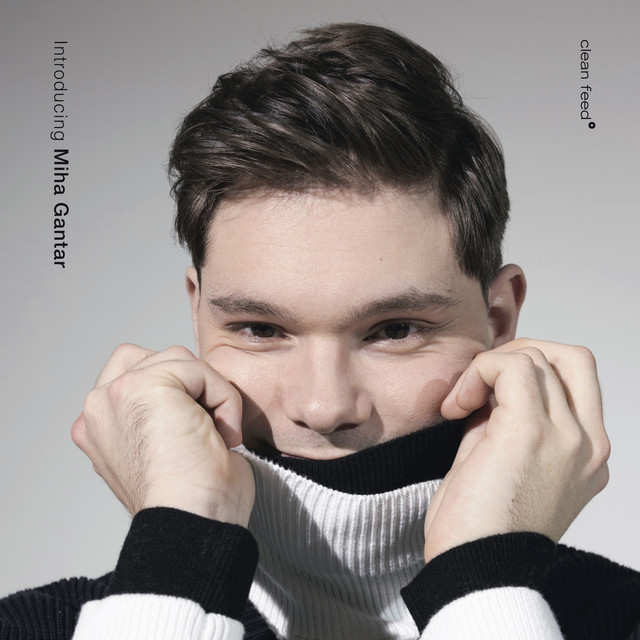
Introducing Miha Gantar, Five CD Box Set, From Piano Solo to Large Group


Music and seasons intertwine. They come and go and if you follow new releases you can be glad for happy surprises when you get them. That is most surely the case lately with a new Clean Feed Five-CD box set Introducing Miha Gantar (CF598CD). The Amsterdam based Slovenian composer-pianist presents us with a panoply of configurations and musical intelligences both related to Avant Jazz and New Music Modernisms within an overall improvisatory-composed hybrid that I suppose we can safely embrace as Jazz. I only say that because it explains why I put this review discussion in the Jazz-oriented blog and not the Modern Classical one.

Disk One: Miha Gantar Solo, Origins of the Pure. The set kicks off with a solo disk that provides a free ranging piano expression of what Miha Gantar is all about. Some of this is electronically multi-tracked and sometimes incorporates alternate tuning along with the standard Western piano pitches. There are moments also that involve some prepared timbres. It is complex, subtle and deeply expressive and reverent and sometimes alternately vibrant. Jazz-like at times in its outpouring of expressive thrust, then abstractly New Music-like in its expanded sprawl of reflexive soundings with extended harmonic-melodic complexities and syntax. It is something that you hear multiple times to the advantage of it all. It gets better, more coherent as you listen in multiple sittings.

Disk Two: Miha Gantar Duo, Songs and Serenades Miha teams up with singer Marta Arpini for some 13 wistfully beautiful yet primal key rooted, melody-harmony glowing gems of tender reflection. This set refuses ABACABA or other typical song sequencing for something more mysterious and sing-songy and sometimes more pointilistically abstracted. Yet it has pianistically a song harmony with vocal topping that relates to Jazz song. Then there is a nice version of "Bye Bye, Blackbird" and that works, too. It is a very charming duo, not quite like anything I have heard elsewhere, Sweet.

Disk Three: Miha Gantar Trio, A Portrait of the Imaginary Here we have a piano trio of Miha, Tijs Klaassen and Tristan Renfrow, bass and drums, respectively. The trio goes off into a mesmerising, never banal reverie of haunting motifs that set up a sort of Unanswered Question not precisely Ivesian but equally probing in its own way. It is Minimalistic yet the motif travels further than some in the genre.

Disk Four: Miha Gantar Quartet, Polymorphic Realities This volume kicks things into high gear with a rollicking energy thrust. It is a dual drumming core of Gerry Hemingway and Christian Lillinger reinforced and furthered by the sound color trumpet and electronics carpentry by Axel Dorner and a central presence of Miha on piano, who little-by-little creates a kind of awe with really stunning chordal and melodic gemstone phrases. It all rolls unto a varied series of depth charges made lavish with thick virtuoso freedom drumming and then definitive trumpet-piano individualisms.

Disk Five: Milo Gantar Large Ensemble, Alternate History of the Future From there we take the ultimate step into a 14 member big band-orchestra. Miha's piano joins forces with oboe, alto sax, alto and baritone saxes, tenor sax, bass clarinet, clarinet and bass clarinet, flute, French horn, trumpet, two double basses, two drums and percussion. It is an ambitious and quite successful sprawl of avant freedom and avant counterpoints with a very spacious total blanket of sound and then a marvelous piano commentary that leaves you wanting more.

And so we go. This is one of rhe most impressive debuts I have ever heard. Mihu is a brilliant talent that noi doubt we will hear much from in the coming years. Take a listen to this by all means. Bravo.

Take a look at the Bandcamp link,where you can audition it all. www.bandcamp.com

Eve Risser, Red Desert Orchestra, Eurythmia


Pianist and composer Eve Risser I've happily appreciated as a fine pianist and a practitioner with roots in Avant Jazz and New Music (see previous posts here by typing in the search box). But then  none of what I've appreciated quite prepared me for a new one by her and her Red Desert Orchestra, Eurythmia (Clean Feed CF609CD). It is something that commanded my immediate attention from the first listen on.

From my first go at it I knew I needed to cover this one. It is firstly a vehicle for Eve Risser's African rooted compositions for big band, consisting of herself on piano and some eleven musicians. The album makes time for some eight pieces, which center around infectious and open groove-freedom exaltations that seriously graft together African riff-rhythm concentrations that leave room for free improvs with floating electronics and horn sailings.

One hears a relation to some of George Russell's Living Time pieces as well as Miles in his Afro-Psych-Groove excursions in his last band from the '70s period. There are elements that suggest an affinity with some of the Art Ensemble of Chicago's Afro-Free meldings as well. And then too we get this band's and Eve's own takes on how that complex of traits lays out in space and time, with a tight series of written expositions and tight, then loose pointillistic improv sublimities.

In the process there is a very nice blend between electronics and acoustics, in a mode that does not separate the two but rather Euro-Africanizes it all in special ways. Antonin-Tri Hoang plays some nice alto and Eve's pianoism are key elements along with some other decent soloists and keen-eared embellishers. The drums-percussion-mallet players happily hold forth with a real verve in ways that remind us how much we who follow the world muse have learned and absorbed from our Mother Africa.

As I listen and re-listen this music grabs me in its deeply expressive and deeply varied whole-part beauty.

Get this one and play it a lot of times. It will doubtless make you smile. Eve Risser must be heard!

Wednesday, September 14, 2022

Andrew Cyrille, William Parker & Enrico Rava, 2 Blues for Cecil


Of all the lineups to expect in new improvisational/Jazz releases, this might not have been especially predictable in my head. But what a great idea, and in listening, you might well exclaim like I did to myself, what a great result. I speak of the recent album by Andrew Cyrille, William Parker and Enrico Rava called 2 Blues for Cecil (Tum CD 059). And of course this is unexpected only because it has not been a combination I am familiar with, not that it is not intuitively right as you contemplate it. After all trumpet master Enrico Rava, innovative drummer Andrew Cyrille and contrabass virtuoso William Parker justly deserve the long appreciation and recognition by followers of the improvisational arts as some of the very most important living exponents of their respective instruments. All of course flourish in a free playing situation. And they certainly do here.

It is one thing to say all of that, it is another to experience the uncanny three-way rapport and excellent high wire poetics of this lengthy but all-essential trio date. Everyone sounds inspired and reveling in the playing possibilities this teaming gave them at that more or less fateful series of musical moments. For the results are nothing short of magic, alternately thoughtful, then contentfully fireworks-explosive.

The rooted, yet free two blues segments here are beautiful--and so fitting a tribute to Cecil Taylor's rising out of the Jazz tradition into something of course completely open and unique.

I have not heard Enrico Rava's trumpet grace my ears in a number of years. The great news is that he sounds beautiful here, as do William Parker and Andrew Cyrille, who have been around the New York situation all along and I have heard pretty frequently in various fine sessions of the last decade.

The entire sequence is wonderfully alive, classic in its own sense, beautifully wrought in the best ways, free and inspired in the best ways. If you imagine this lineup and know the players stylistic strengths, imagine what that might sound like. This album gives you that in rewardingly strong ways.

Brilliant album. Big kudos to all concerned. Get this without fail!

Thursday, September 8, 2022

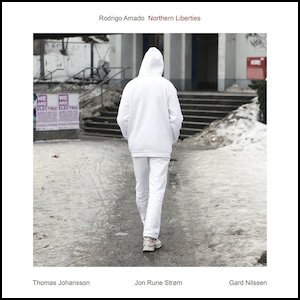
Rodrigo Amado, Northern Liberties


The world during the height of the pandemic hung in suspension. Things arrived more later than sooner. The response was the same at times. So this reviewer finds he is catching up with some very good things now. Rodrigo Amado's 2017 session Northern Liberties (Not Two Records MW 1016-2), which came out last year, was inexplicably buried in piles for a time. A thorough sorting unearthed it and it turned out to be timeless, ever at the vivid listening point for my sound fare regardless of season or time.

The album centers on four rough-and-ready collective improvisations by Amado on tenor, Thomas Johansson on trumpet, Jon Rune Strom on doublebass, and Gard Nilssen on drums. It is a very mutually simpatico band where Amado stands out quite naturally but the four of them have an ideal give and take throughout. Everyone has their say in the end. It is what a collectivity should be to my mind. This is some seminal free jazz expression, a happy confluence anyone who loves open free blowing will no doubt embrace.

It is classic avant expression, a torrid wash of freetime energy blowing following in the footsteps of Ayler, Ornette, late Trane and such, with some of Rodrigo's most excellent presencing on disk. He affirms once again his stature as a tenor of true importance on today's scene. Get this!