Wednesday, February 29, 2012

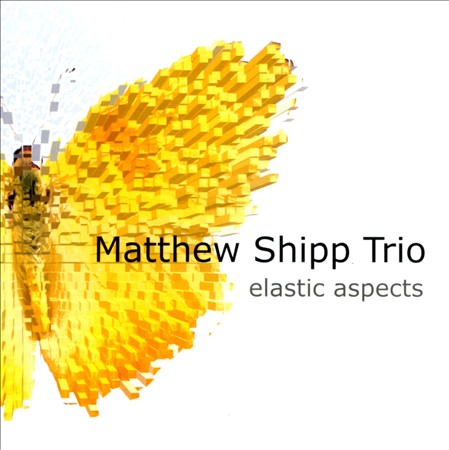
Matthew Shipp Trio, Elastic Aspects


The Matthew Shipp Trio today are a group like no other out there. Why? Because each of them have played through the bumps and jolts of the initial dues-paying period and ultimately triumphed as players of themselves. Surely there are influences, but as you listen to their new recording Elastic Aspects (Thirsty Ear 57202.2) you hear a group of artists who have become tempered in the fire of the scuffle to become their own instruments of expression. Matthew probes and hammers out his own vocabulary, new thing, repeating figures, harmonic-melodic vertical-horizontal aspects that come out of roots and branch upwards, rhythmic diversity, inside-the-piano extensions. Michael Bisio prods the bass with punctuated hammering, walks smartly like he is sure of the goal, plays arco with an individually distinctive tone and projective phrasing and fits into the group situation with his own version of what to do. Whit Dickey has his own version, too, in his case of the drum tradition and how it can be extended, whether it be in the playing time mode or with cascading freedom, and the grey areas in between.

There are 13 improvisational excursions on the album, each distinct. There are unaccompanied solos, duets and full trio segments. They fit together as pieces of what is NOW. In the end you get a very creative take on the new piano trio and how, in Shipp and Company's hands, it goes where it will and owes nothing to anybody. You can build, they seem to say, your own musical personality as individual and as a group in the full heat of the battle to survive and prevail. They do that here.

It is one of the important piano trios operating today. You cannot afford to miss them.

Tuesday, February 28, 2012

Baloni, "Fremdenzimmer:" Trio Improvisations in an Abstract Mode


Some improvisational music today, especially that coming out of Europe, has roots more in "new music" than it does in Bird or Bud. There is a distinct enough sub-genre there that Bob Rusch has dubbed the entire overarching musical category "creative improvised music." It's another aspect of the debate on the use of the term "jazz" and I personally can't say that there is an easy answer to any of it--other than to say that if you remove the identity politics element, there is a continuum between modern jazz on one end and new music on the other, with rock and electronic influences in the middle. This is just so. Let us give credit to those who deserve it and reserve condemning any of it if it doesn't fit in with the ends or middle of the spectrum. The debate may be an assertion of identity in times when almost nobody playing undiluted improvisational music is financially solvent unless they teach, at least over here in North America. I think that's the principal defining impetus behind everything. Now I could be wrong but what matters to me is music first of all. The rest is always a huge factor in social life but not on the musical level in some ultimate sense.

So today we have a trio called Baloni who falls most definitely into the new music side of the spectrum. They play an abstract sort of chamber trio music that flows nicely, has musical high points and engages fully the creative ideas of each of the players.

The album at hand is Fremdenzimmer (Clean Feed 237). Baloni is Joachim Badenhorst on bass clarinet, clarinet and tenor, Frantz Loriot on viola and Pascal Niggenkemper on doublebass. They play eleven improvisatory pieces, some longer than others, but all showing very good inventiveness in the realm of spontaneous form, with compositionally pre-planned ideas coming in at times as well, apparently.

It's music that one who doesn't know already what is being attempted will find puzzling. Those people need to be educated and our media (Statewise) has no doubt no intention of ever addressing the issue. It's part of world culture, part of our culture! It's something we should be proud to know. Not, as we've seen, according to barbaric money-changer media moguls that control most of the airwaves. A pity. A crime. No, they say we should be concerned with who is wearing what crazy gown at the Oscars. Even though not as many are going to the movies these days. Who actually saw the winning pictures at a theater? Well I suppose that shouldn't matter. Nonetheless the same old pap prevails in our unregulated cultural mass-media lives. Stars have become much more important than what they actually do, if anything. Fabian and Tiny Tim should have given us a warning of what was coming? There are generations thriving now who never heard of either but nonetheless worship the latest equivalent of superficiality, the Tims and Fabians of 2012.

Do something about it. Listen carefully to this CD and other worthy examples in all the improvisational spectrums that prevail today. You'll be supporting people directly. You'll be all the richer in your cultural life!

Monday, February 27, 2012

Nicholas Biello / Manuel Weyand, Fourthought


Hard bop finds some enthusiastic and soulful adepts in Nicholas Biello and Manuel Weyand's album Fourthought (self-released). It's a quartet at work here--Biello on alto and soprano sax, Weyand on the drums, Cameron Kayne on the doublebass, Kerong Chok on piano. They do good blowing originals by Biello or Weyand, and an arrangement of "On Green Dolphin Street."

Biello has that McLean-Cannonball fire, Weyand plays in a well-schooled modern bop drum style, both in solo and timework, Chok accompanies and solos with creative authority in a post-Corea-Tyner-Walton sort of way and Kayne gets a nice sound and makes good note choices.

It's a very together disk with a reverence for tradition and no loss of fire and conviction. There are plenty of bands out there that try and revive this form of jazz. Few do it as convincingly as these folks. It goes there. It gets there!

Friday, February 24, 2012

Kazhargan World, "Wonderful Times"


Kazhargan World is a cooperative unit made possible by the internet. Wonderful Times (Dewey Records) is the product of the cooperative project. The members discussed and arranged the music via electronic communication, then presumably recorded each part singly and synched them together as a finished product. The group consists of Stan Zaslavsky on piano, Hans Peter Salentin on trumpet, Cheryl Pyle on flute and recitation/poetry, Max Ridgway on guitar, Brian Mitchell Brody on sax, Sean O'Bryan Smith on the electric bass, and Tony Cimorosi on doublebass. And finally on drums and percussion is Alesandr Zaslavsky.

The album goes from a contrapuntal chamber jazz with interlocking piano, trumpet, flute and guitar against a swinging walk to more contemporary jazz-lyric-exotica, longing poetics from Ms. Pyle, and an overarching aesthetic of creativity.

The soloists work together well and sound quite good; their interchanges are most certainly a high point of the disk. The compositional elements are quite interesting and worth hearing too.

In the end you have a disk with some strikingly new ways to get somewhere, a lot of ground covered, excellent musicianship, good writing and arranging. The four-horn front line of Zaslavsky-Salentin-Pyle-Ridgway impresses.

It's a very pleasing album with plenty of substance to it. Give it a listen.

Thursday, February 23, 2012

No Milk Today


Thanks to my virus software, the time I would have spent writing today's review was instead spent watching the software update itself for an hour, which I suspect meant that it was stuck. It doesn't like when you turn off "automatic updates" and punishes you by demanding up to an hour of your computer time whenever if feels like it, then basically uses up all the memory and does nothing so far as I can tell. Grrr! See you tomorrow.

Wednesday, February 22, 2012

Andrea Centazzo, Rain On The Borders: New Hybrid Sounds from the Mitteleuropa Orchestra


Andrea Centazzo the composer? Yes. He has in later years come to develop his music in a composi- tional direction and Rain On the Borders (Ictus 308) is a very good place to sample the orchestral component. The album consists of the title piece conducted by the composer, recorded in 1995, and several shorter works from 1986. Together they give a coherent and musically satisfying overview of some of this work.

"Rain on the Borders" has a minimalist post-Riley-Reichian motor periodicity to the opening section and then something more rhapsodic, yet also rhythmically active towards the end of the second half. Soprano Lia Lantieri and pianist Dennis Biancucci come over well in their solo parts.

The second half of the CD features jazz-tinged solo spots for Roberto Ottaviana, Carlo Actis Dato and Roberto Manuzzi. "Tiare" brings an attractive repeating and developing motif in the orchestra against a pulsating mallet ensemble."Tina Suite" has bold orchestration and some dramatic brass blocks against a pulsating rhythmic foundation.

The four part "Pasosuite" continues to unveil Centazzo's take on minimalism with dynamic malletwork against bold, brassy motif development.There's room for some fleet and out sax work, Mr. Dato sounding quite empassionaed and acrobatic.

The point though is that this is music that has excitement, beauty, contour and irresistible pulse. There is a muscular lyricism at work that is a hallmark of the Centazzo's style of this era.

A very invigorating listen! Recommended.

Tuesday, February 21, 2012

Francois Carrier-Michel Lambert-Alexey Lapin, All Out, 2011


All Out (FMR 321-0911) is just that. It's the free trio of Francois Carrier (alto), Michel Lambert (drums) and Alexy Lapin (piano) going at it full tilt. It's all about the notes, the flow, the intensity of inspired expression.

Francois sounds especially on top of it for this date. He plays an unending flurry of very together note-ing, spurred on by some excellent Alexey Lapin piano and the always lucid drums of Michel Lambert.

It's seventy-some-odd minutes of great free jazz. Carrier is at the top of his game and the trio is rather remarkably going All Out. Needless to say you really should hear it.